
Last updated November 16, 2026
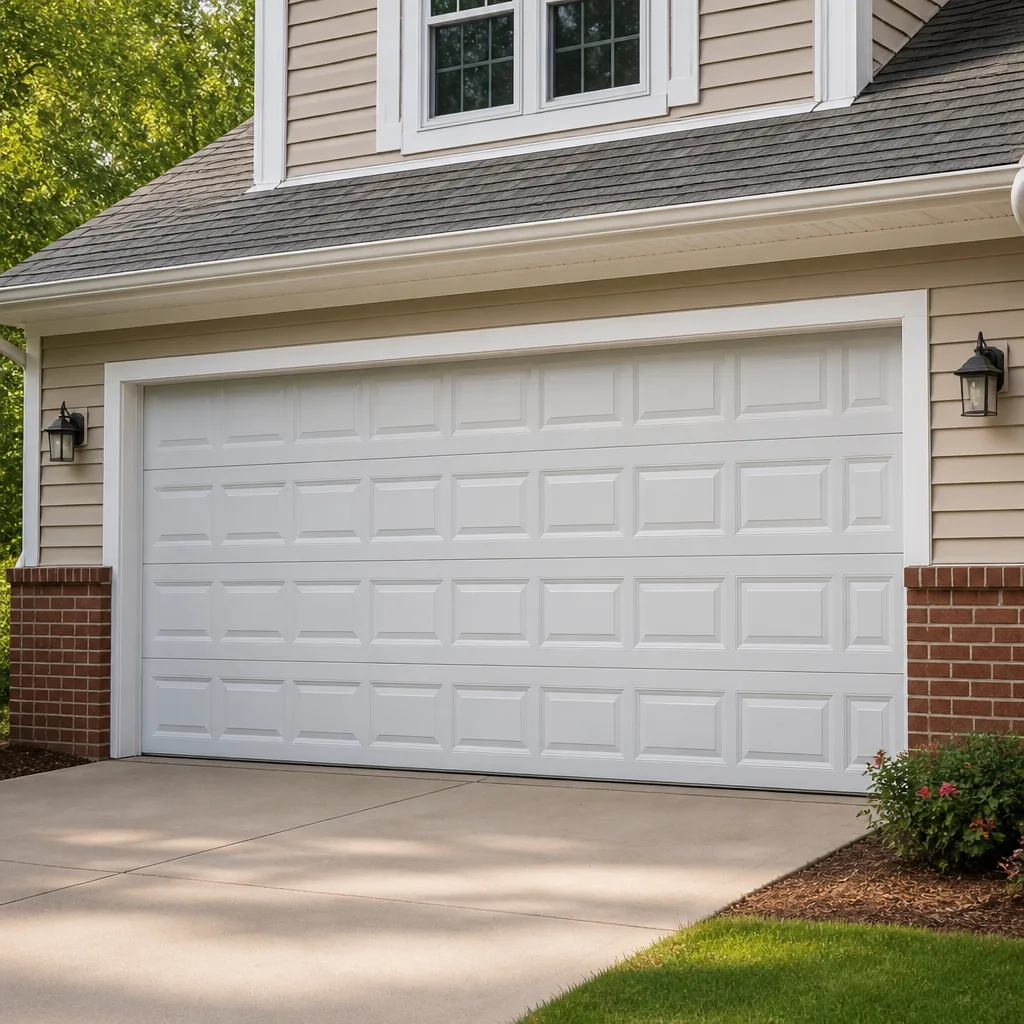 Raised-panel steel
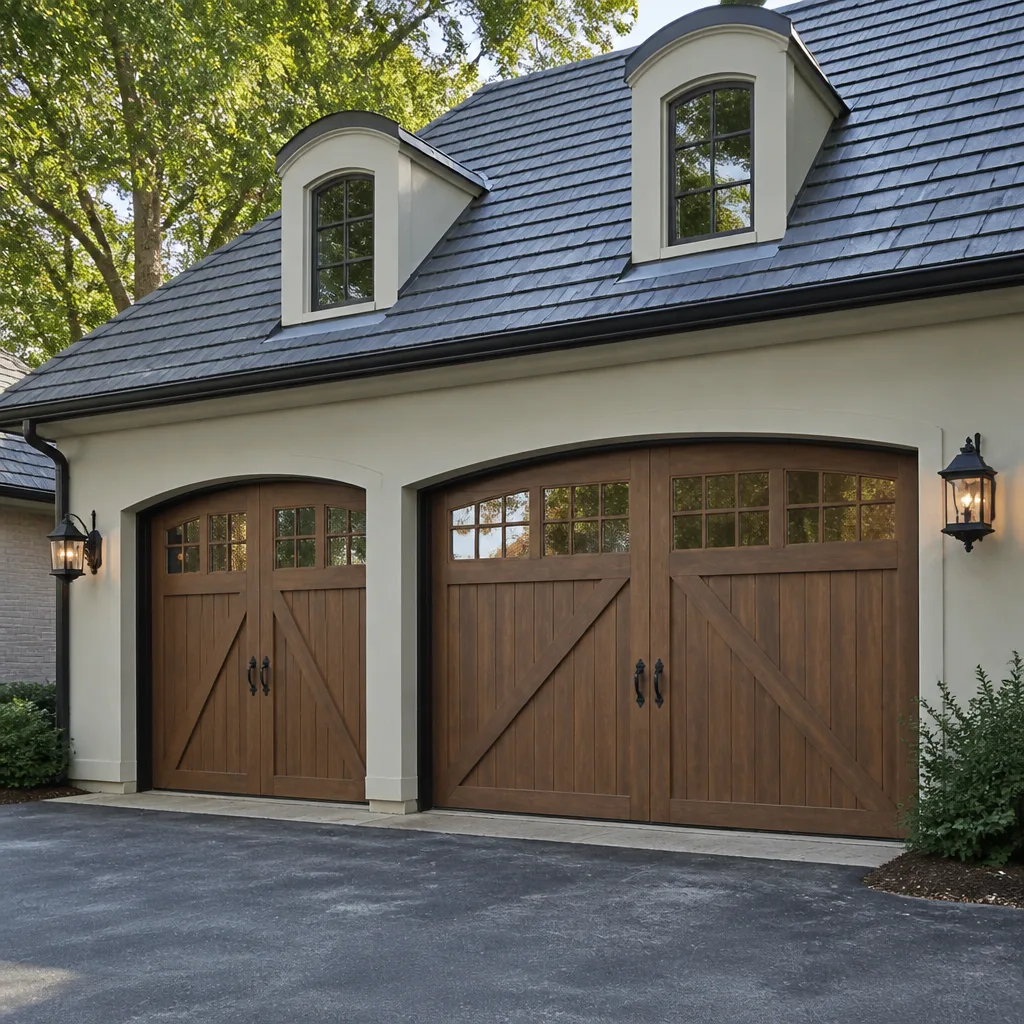 Carriage house
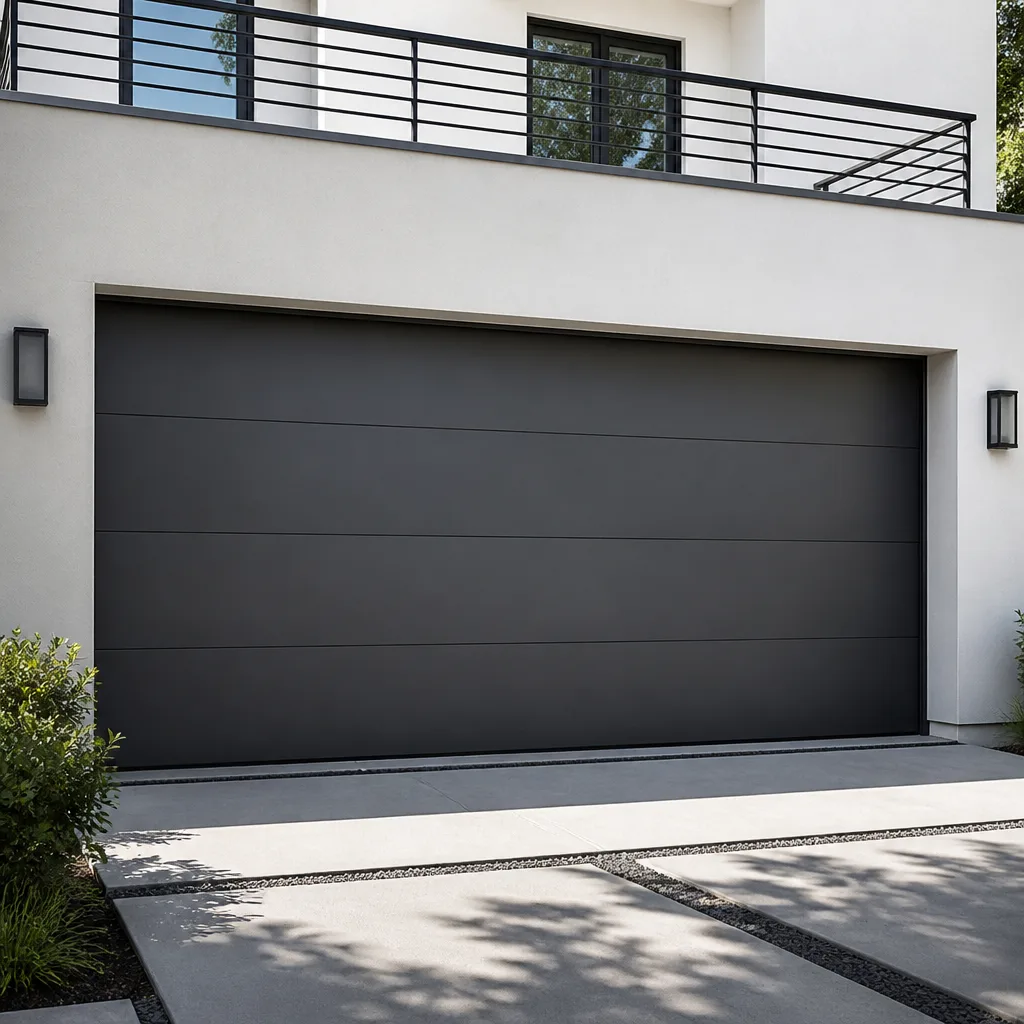 Modern flush
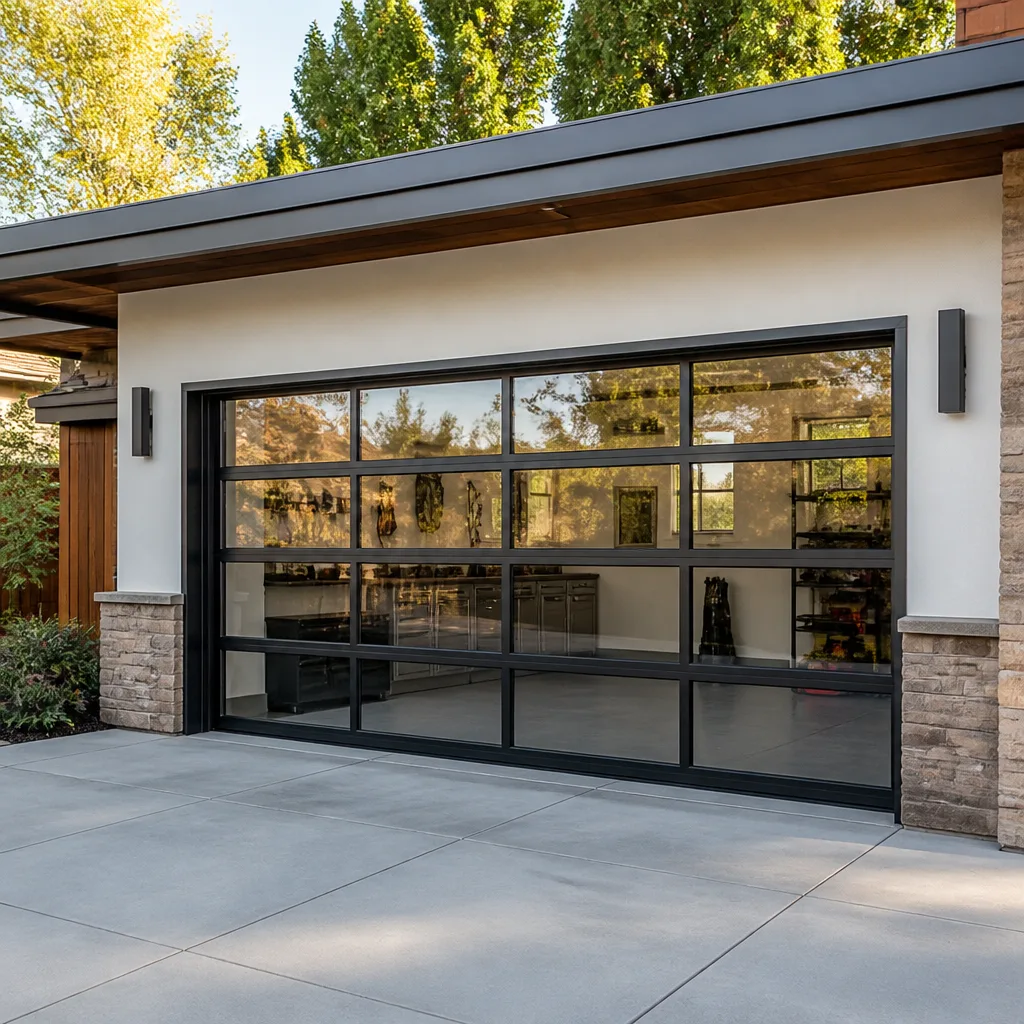 Full-view glass
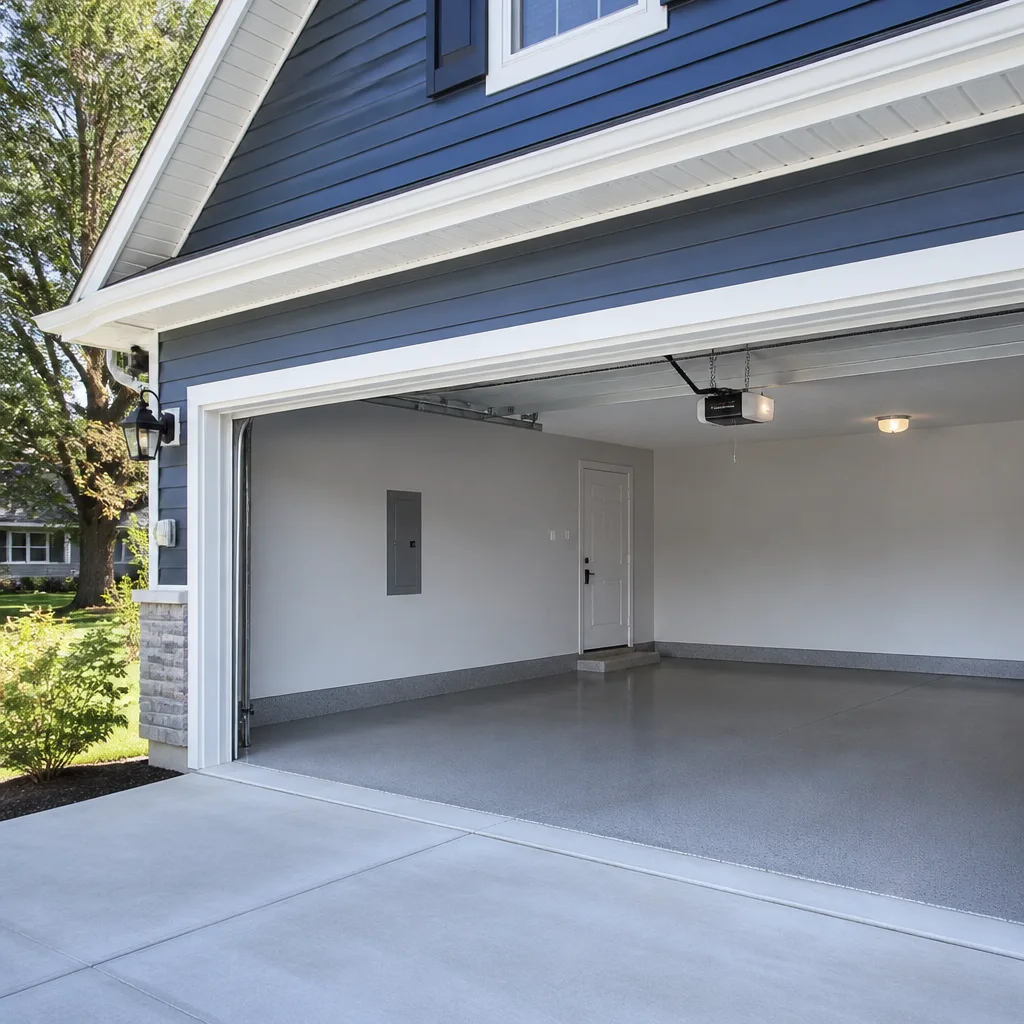 LiftMaster openers
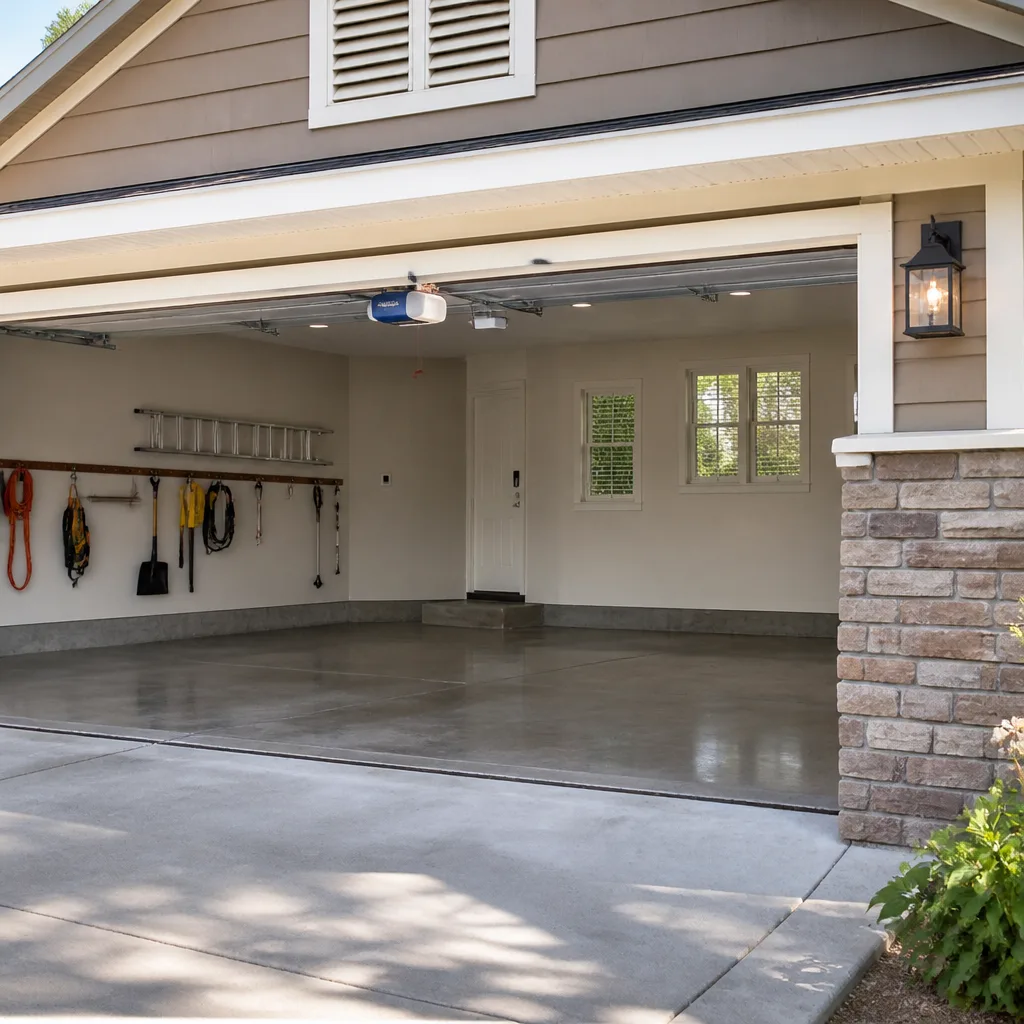 Chamberlain openers
Full 25-point door and opener safety check with every visit - springs, cables, rollers, tracks, and your LiftMaster or Chamberlain opener included
You get a price before we start. It does not change when the pro arrives.
Get your free estimateThe Complete Guide to Garage Doors in Columbia
Most garage door advice is written for a mythical average climate: mild winters, dry summers, one kind of house. Columbia doesn’t fit that template. Howard County sits in a humidity corridor where summer air stays heavy for weeks, then swings into hard freezes that contract metal and stiffen every moving part. That cycle repeats year after year, and it shapes everything from which springs last to which panel materials hold their shape. We’ve worked on doors across Columbia’s villages and watched the same patterns show up again and again. This guide walks through what actually matters here: HOA covenant rules, material choices for our climate, opener compatibility in older homes, and a repair-versus-replace decision path you can use today.
Quick Answer
The best garage door for a Columbia home is one that matches your village’s HOA covenant, uses materials that survive the humidity-heat-freeze cycle (steel or insulated composite over untreated wood), and pairs with an opener rated for your door’s weight and age. Repair first when the door structure is sound and only a component failed; replace when panels, springs, and hardware are all near end of life at once. A specialist who works on your existing brand will usually cost you less than a company that defaults to replacement.
Styles & brands we work with
- Raised-panel steel
- Carriage house
- Modern flush
- Full-view glass
- LiftMaster openers
- Chamberlain openers
Table of Contents
- How Howard County HOA Covenants Shape Your Door Choice
- Which Materials Hold Up in Columbia’s Climate
- Garage Door Company vs. Garage Door Repair Specialist
- Older Columbia Housing Stock and Opener Compatibility
- Repair, Tune-Up, or Replace: A Decision Path
- Springs, Cables, and Why You Shouldn’t Touch Them
- What Garage Door Work Typically Costs in Columbia
- Common Mistakes to Avoid
How Howard County HOA Covenants Shape Your Door Choice
In Columbia, the first question about a new garage door usually isn’t about material or price. It’s about whether the village architectural committee will approve it. Columbia is organized into villages, and most carry covenants that govern exterior changes, including garage door style, color, and sometimes panel configuration. Replacing a door without checking first is the single most common way homeowners end up redoing a project.
Here’s what the covenant review usually involves:
- Color matching. Many villages restrict doors to a palette that coordinates with the house and streetscape. A door that’s technically “white” may still be rejected if it’s a different sheen or tone than the approved standard.
- Style consistency. Raised-panel versus carriage-house versus flush panel matters. Some villages expect a look consistent with the original build era.
- Window and glazing rules. Decorative windows may be fine, but some covenants limit the number or placement of them.
- Submission timing. Architectural review takes time. Ordering a door before approval risks a non-refundable special order.
The practical sequence is straightforward. Pull your village’s design guidelines, pick a door that fits them, submit the request, then order once you have written approval. If you’re unsure which village rules apply to your address, your village community association is the place to confirm. We always ask about HOA status before quoting an installation, because it changes what we can recommend. For a closer look at how we approach residential work around Columbia, that page covers the local service picture.
Which Materials Hold Up in Columbia’s Climate
Columbia’s weather does two things to garage doors: it swells and warps wood during the humid stretch, then contracts everything when the cold snaps hit. The material you choose determines how much of that movement your door absorbs before it starts sticking, sagging, or cracking.
Here’s how the common options sort out for this climate:
- Steel. The most reliable choice here. Steel panels resist humidity, hold paint well, and handle freeze-thaw cycling without warping. Insulated steel adds rigidity and helps with temperature swings in an attached garage. Watch for dents and touch up scratches to prevent rust.
- Aluminum. Light and rust-resistant, but dents more easily than steel. Fine for a lightly used door, less ideal for a busy household.
- Wood. Beautiful, but the highest-maintenance option in a humid corridor. Solid wood needs regular sealing to keep moisture out, and unsealed wood is where warping starts. Composite and wood-look overlays give you the appearance with far less upkeep.
- Fiberglass and composite. Good moisture resistance and won’t rust. Some composites can fade or chalk in strong sun, so check the finish warranty.
For most Columbia homes, insulated steel hits the best balance of durability, cost, and HOA-friendly finishes. If you’re set on wood for the look, plan on sealing it on a schedule rather than once. The garage door repair conversation often starts with a wood door that swelled and stopped tracking true. Choosing the material with the climate in mind prevents that.
Garage Door Company vs. Garage Door Repair Specialist
This distinction saves Columbia homeowners real money, and it’s worth understanding before you call anyone. A general garage door company often makes most of its margin on installations. A repair specialist makes its margin on fixing what you already own. Those two business models lead to very different recommendations when a technician walks into your garage.
What you’ll notice in practice:
- A company that leans toward installs may present replacement as the simpler path even when a repair would solve the problem. A worn opener, a snapped spring, or a bent track are all fixable on a door that has years left.
- A repair specialist starts with diagnosis. We look at the door’s structure, the balance, the opener’s behavior, and the age of the components, then tell you what’s failing and what isn’t. Sometimes the honest answer is that a door is genuinely at the end of its life. Usually it isn’t.
- Brand fluency matters. A technician who works across LiftMaster, Wayne Dalton, Craftsman, and the rest of the major brands recognizes parts and failure patterns immediately. A general handyman is learning your system on your time.
We’re a specialist, and we work on the equipment you already have. If your Craftsman opener is acting up, we diagnose the Craftsman. If your Wayne Dalton door is off its track, we fix the Dalton. That brand-agnostic approach is the whole point. It also means we can take a job from a single failed spring all the way through to a full replacement later if that’s what the door eventually needs, without you calling a second company.
Older Columbia Housing Stock and Opener Compatibility
Columbia grew up in waves, and plenty of its homes date to the 1970s through the 1990s. That age matters when you’re troubleshooting an opener that “just started acting weird” or trying to figure out why a new smart opener won’t pair with the wiring already in the ceiling.
The issues we see most in older Columbia garages:
- Outdated wiring. Original low-voltage wiring from the wall button to the opener can degrade, causing intermittent operation that looks like an opener failure but is really a connection problem.
- Legacy safety sensors. Older openers may have sensor setups that don’t meet current safety standards. Newer openers use a beam that reverses the door if something crosses it, and retrofitting is sometimes part of the job.
- Spring sizing tied to the original door. When a door is replaced or a spring is swapped, the new spring has to match the door’s actual weight and track geometry. On a 1980s door, the original spec may no longer be the right spec if panels have been replaced over the years.
- Horsepower mismatch. A replacement door that’s heavier than the original (insulated steel, for instance) may overload an older opener. Matching opener capacity to door weight avoids premature motor failure.
- Smart-home pairing. Modern openers like today’s LiftMaster units connect to phone apps and home systems. Getting there from a decades-old opener sometimes means new wiring, sometimes a full opener replacement, and sometimes just a bridge device.
In our experience, the older homes around Columbia reward a careful look before anyone quotes anything. What looks like a dead opener is often a sensor or a wiring issue. What looks like a worn door is sometimes just a balance problem. Getting the diagnosis right is the difference between a small repair and an unnecessary replacement. That’s why garage door opener repair is its own specialty for us rather than an afterthought.
Repair, Tune-Up, or Replace: A Decision Path
This is the question we field most often, so here’s a practical way to think it through. The answer depends on three things: the door’s structural condition, the age and reliability of its components, and how many things are failing at once.
Use this sequence:
- Is the door itself sound? Sight down the panels. Are they straight, rust-free, and free of cracks? Do the tracks run true without bends? If yes, the door is a repair candidate. If the panels are rusted through, cracked, or visibly sagging, replacement moves up the list.
- What failed? A single broken spring, a snapped cable, a bent track, an opener that won’t respond, or a door that won’t close evenly. One component failing on an otherwise healthy door is a repair. That’s the standard case, and it’s usually the least expensive path.
- Is it a tune-up or a breakdown? A door that’s noisy, sluggish, or slightly off balance but still opens and closes is a tune-up candidate: lubricate the moving parts, check the balance, tighten hardware, adjust travel. A door that’s stuck, hanging on one side, or making a loud crack is a repair.
- How old it is? Components have service lives. Springs, rollers, and opener motors all wear. If one part fails on a door where everything else is also near end of life, repairing piece by piece can cost more over a year than a single replacement.
- What’s the pattern? One failure after a long stretch of trouble-free use is normal. Repeated failures within a short window usually signal a deeper problem: a misaligned track, a door out of balance, or an opener driving a door it was never sized for.
New garage door installation is the right answer when the door’s structure and hardware are all failing together, or when a homeowner wants a different look or better insulation. But that’s a decision to make after diagnosis, not before it. Repair-first is the default, and replacement should be the considered exception.
Springs, Cables, and Why You Shouldn’t Touch Them
Torsion springs and the cables they work with are under extreme tension. That stored energy is exactly what makes the door easy to lift, and exactly what makes these parts dangerous. This is one area where a trained technician isn’t a nice-to-have. A torsion spring that releases unexpectedly can cause serious injury, and the risk isn’t obvious by looking at it.
What you can safely check on your own:
- Listen. A loud bang from the garage, followed by a door that won’t lift, usually means a spring broke. Don’t force the door up.
- Look. A visible gap in the spring coil, or a cable that’s come off its drum, means stop and call.
- Test the balance carefully. With the door closed and the opener disconnected per your owner’s manual, lift the door partway. If it won’t stay put or feels excessively heavy, the springs or balance need attention.
- Keep clear. Don’t stand under a door with a suspected spring or cable problem, and don’t try to wind, unwind, or adjust springs yourself.
What you shouldn’t do: attempt to replace or adjust a spring or cable, run the opener repeatedly on a broken door, or prop up a door and hope. When in doubt, leave it down and call a professional. This applies to electrical and opener wiring as well. If you see frayed wires or smell burning, stop. Anything involving springs, cables, or high-voltage connections is work for someone trained on it. We handle garage door repair with that safety margin built in, because a door that comes crashing down is a much bigger problem than a door that won’t open.
What Garage Door Work Typically Costs in Columbia
Garage door work varies by job, and the final number always comes down to what a technician finds on site. What we can give you is a realistic range of typical local prices so you can plan, with the understanding that a written estimate sets the actual cost before any work begins.
Here are estimated ranges for common jobs in the Columbia area:
- Spring replacement (one spring): typically a few hundred dollars. A matched pair is usually replaced together, so a pair runs roughly twice that. We don’t quote one price for both.
- Cable or roller replacement: falls in the lower-to-mid hundreds, depending on the part and the door.
- Opener repair: varies widely. A remote or sensor fix is on the low end; a motor or circuit board issue runs higher.
- Opener replacement: the mid-to-upper hundreds, depending on unit and whether wiring needs updating.
- Full door installation: the largest project. Standard single doors start in the low four figures; larger, insulated, or custom-look doors go up from there.
Two things to know before you book. First, the estimate is free, and the price is quoted and agreed before any work starts. Second, if a technician discovers something on site that changes the scope, you’ll hear about it before the work proceeds, not on the invoice. That’s the standard we hold ourselves to. Prices are estimates, not final figures, and the written estimate is what governs. Call (888) 721-9522 for an exact quote. Estimates are free.
Common Mistakes to Avoid
- Ordering a new door before checking HOA covenants. Columbia’s village architectural rules govern style and color, and a rejected door can mean a non-refundable special order you can’t use. Pull the village guidelines and get written approval first.
- Choosing wood without a sealing plan. In this humidity corridor, unsealed wood warps and swells. If you love the wood look, commit to regular sealing or choose a composite that gives you the appearance without the upkeep.
- Assuming a broken door means replacement. A stuck or unresponsive door is often one failed part. Diagnose before you decide, and be wary of anyone who leads with replacement before they’ve looked at the actual failure.
- Ignoring opener capacity. Replacing a light door with a heavier insulated one without matching the opener leads to repeated motor trouble. Match the opener to the door’s real weight.
- Trying to adjust springs or cables yourself. These parts store enormous energy and cause serious injuries. Leave springs and cables to a trained professional.
- Hiring a general handyman for opener electronics. Openers are motors, circuit boards, sensors, and smart-home radios. A specialist who knows the Raynor or LiftMaster system you have will diagnose it faster and fix it right.
- Letting a small issue become a big one. A noisy roller, a slightly off-balance door, or a sensor that needs adjusting is a cheap fix now. Left alone, it strains the opener and the door’s structure.
See the difference
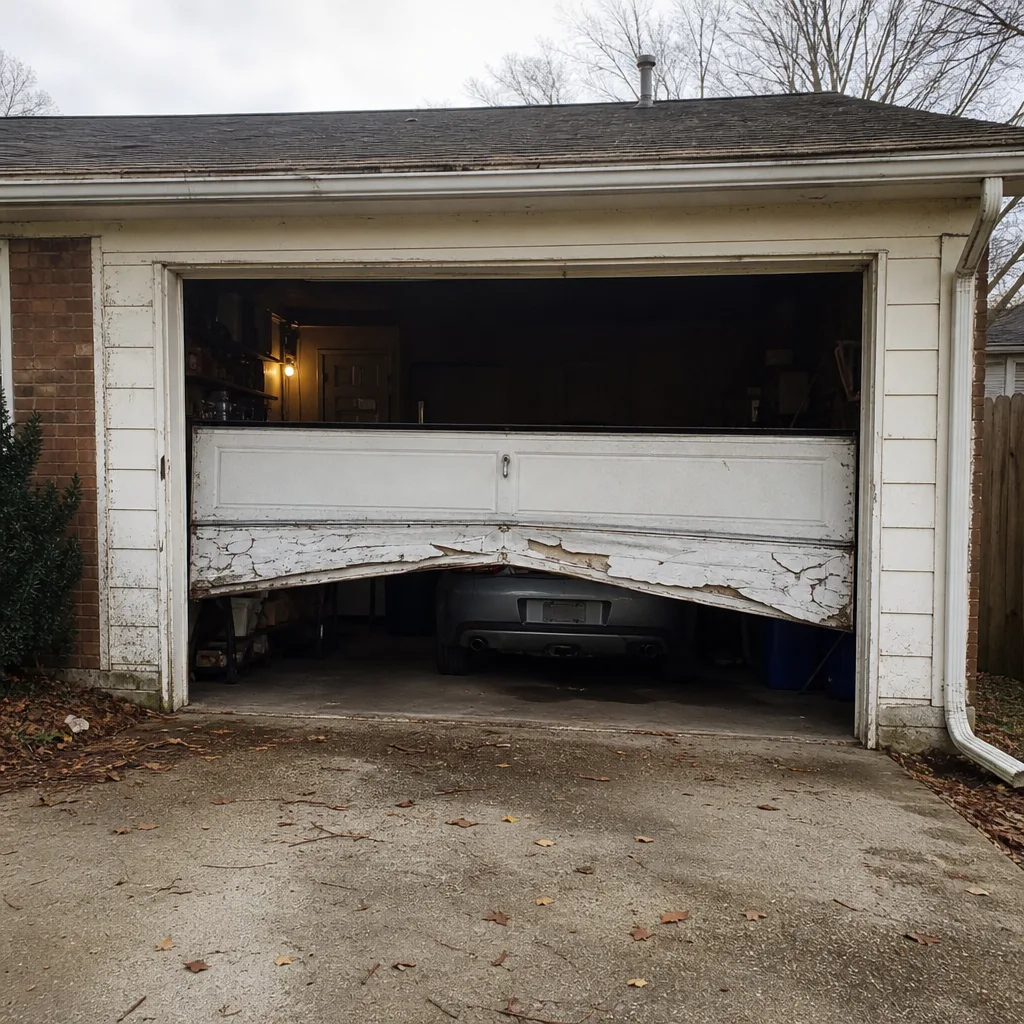 Before
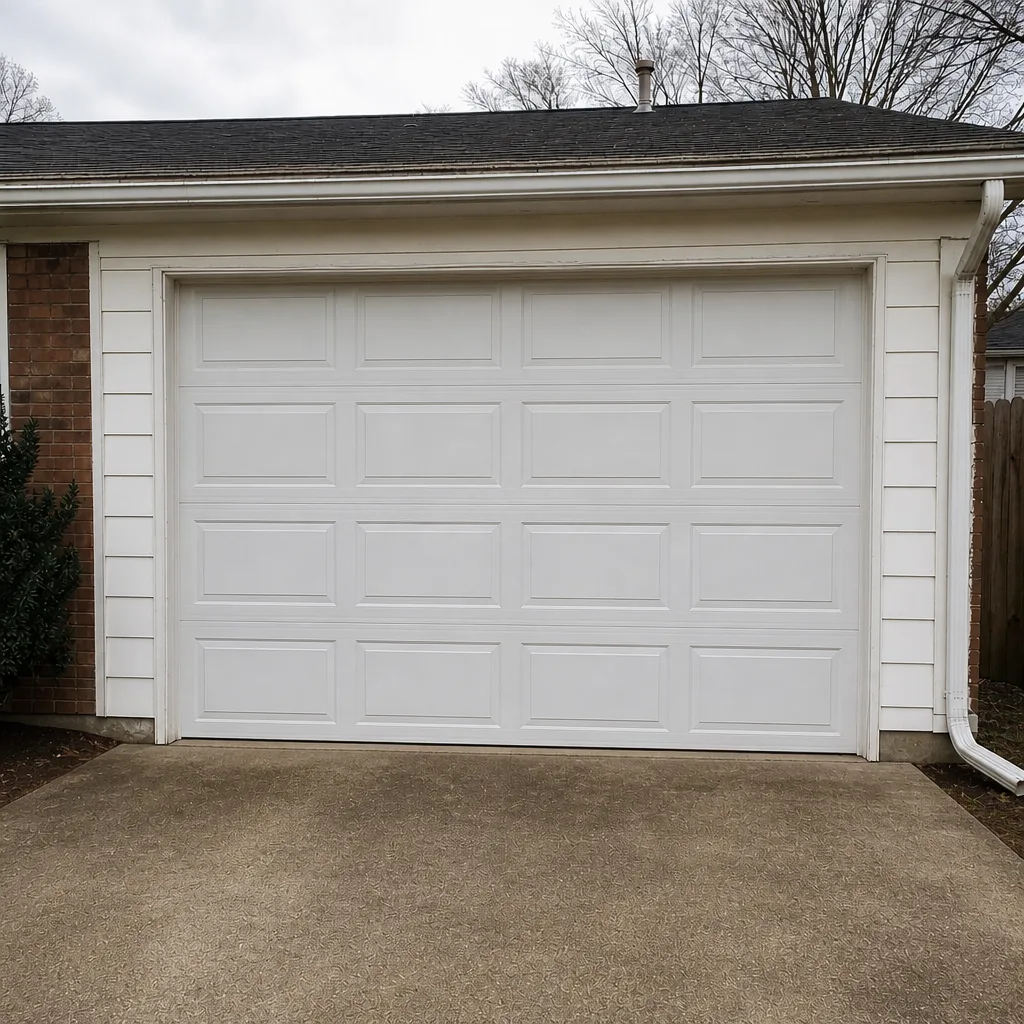 After
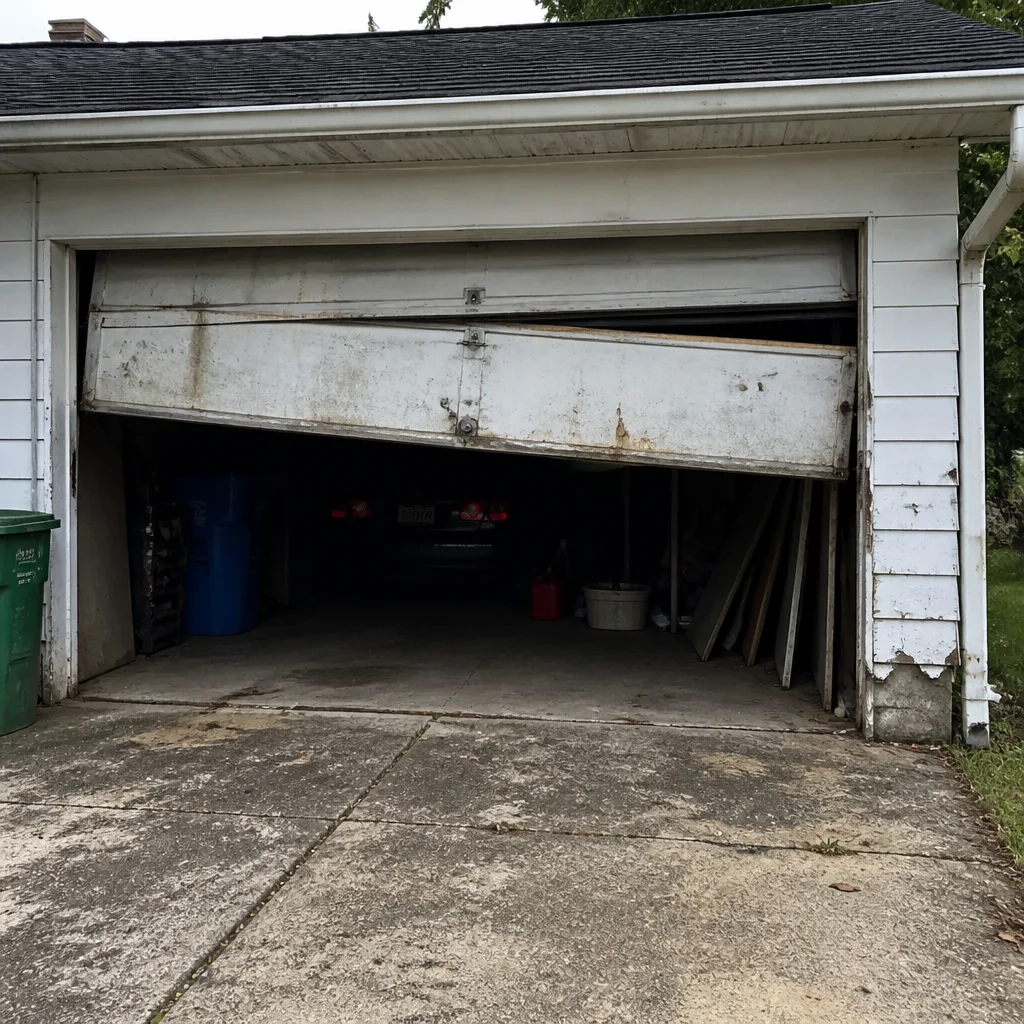 Before
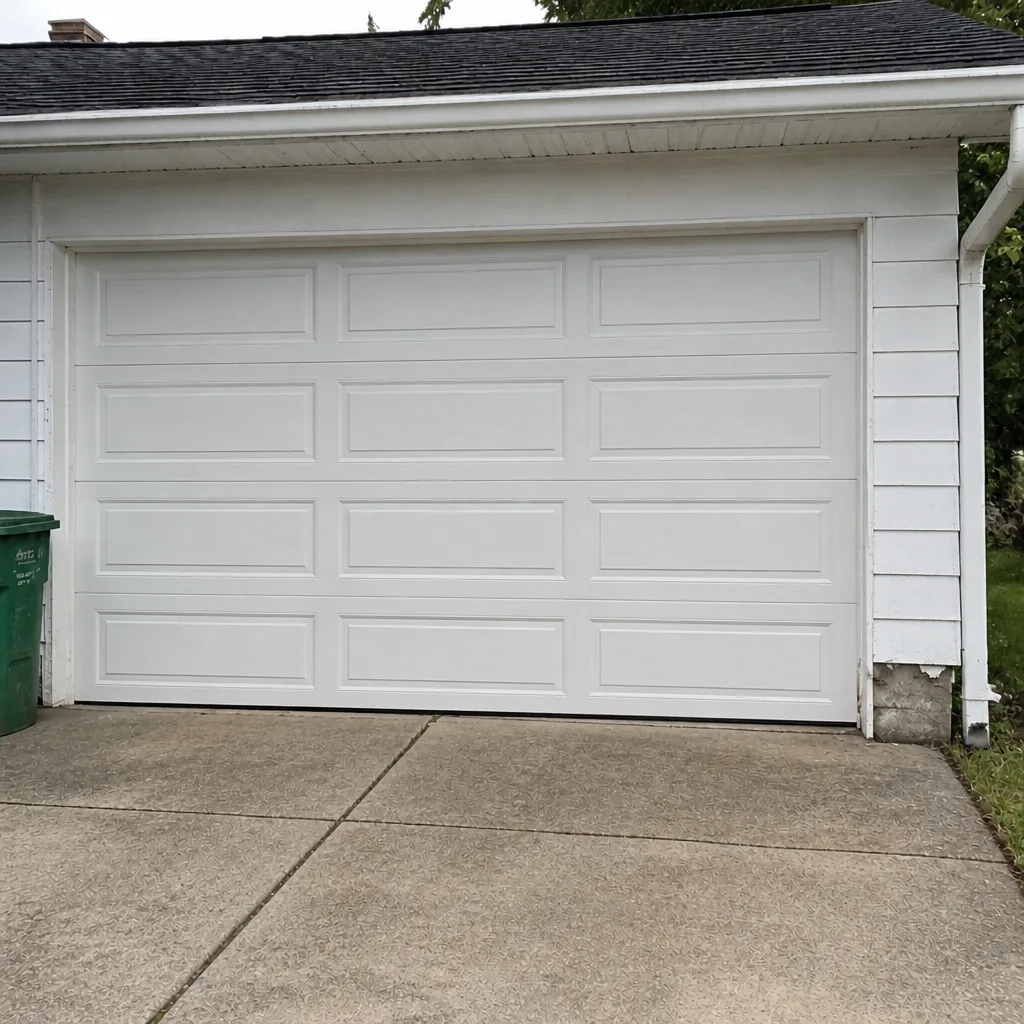 After
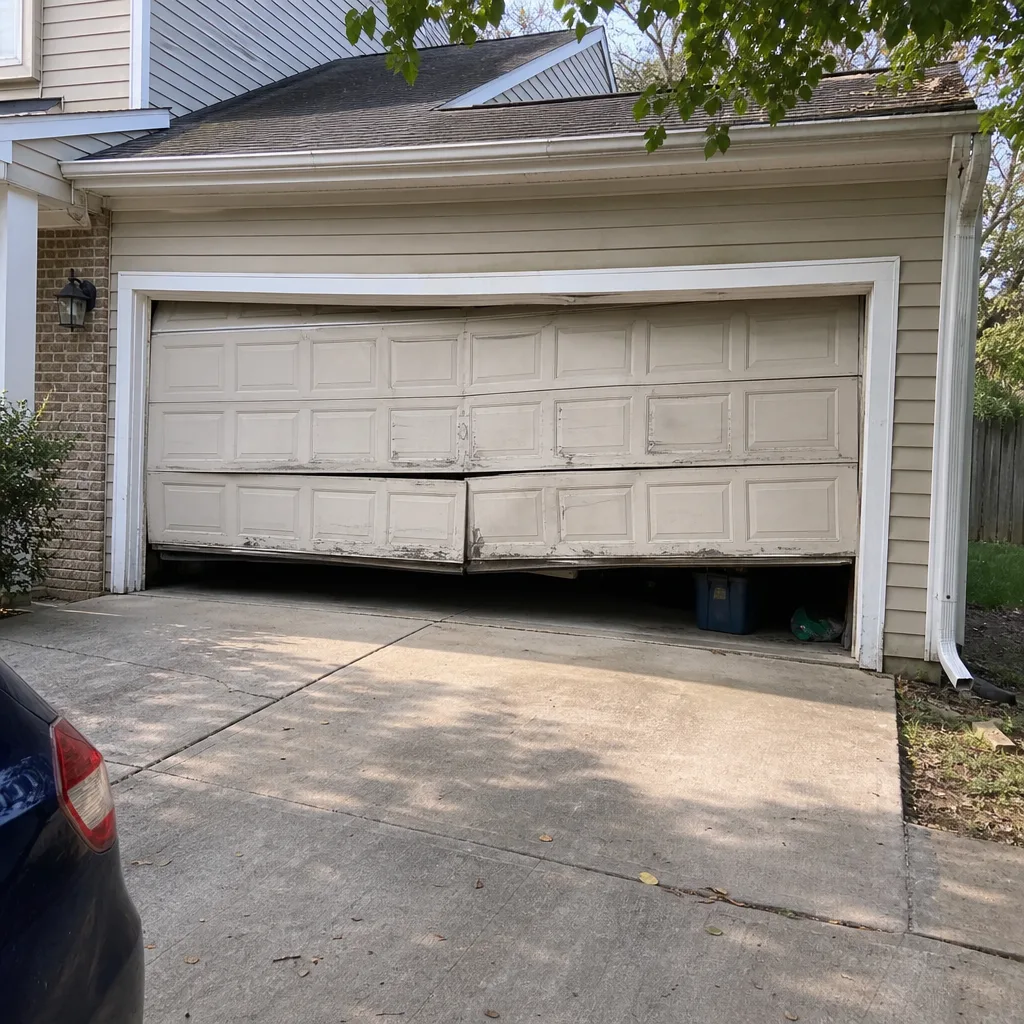 Before
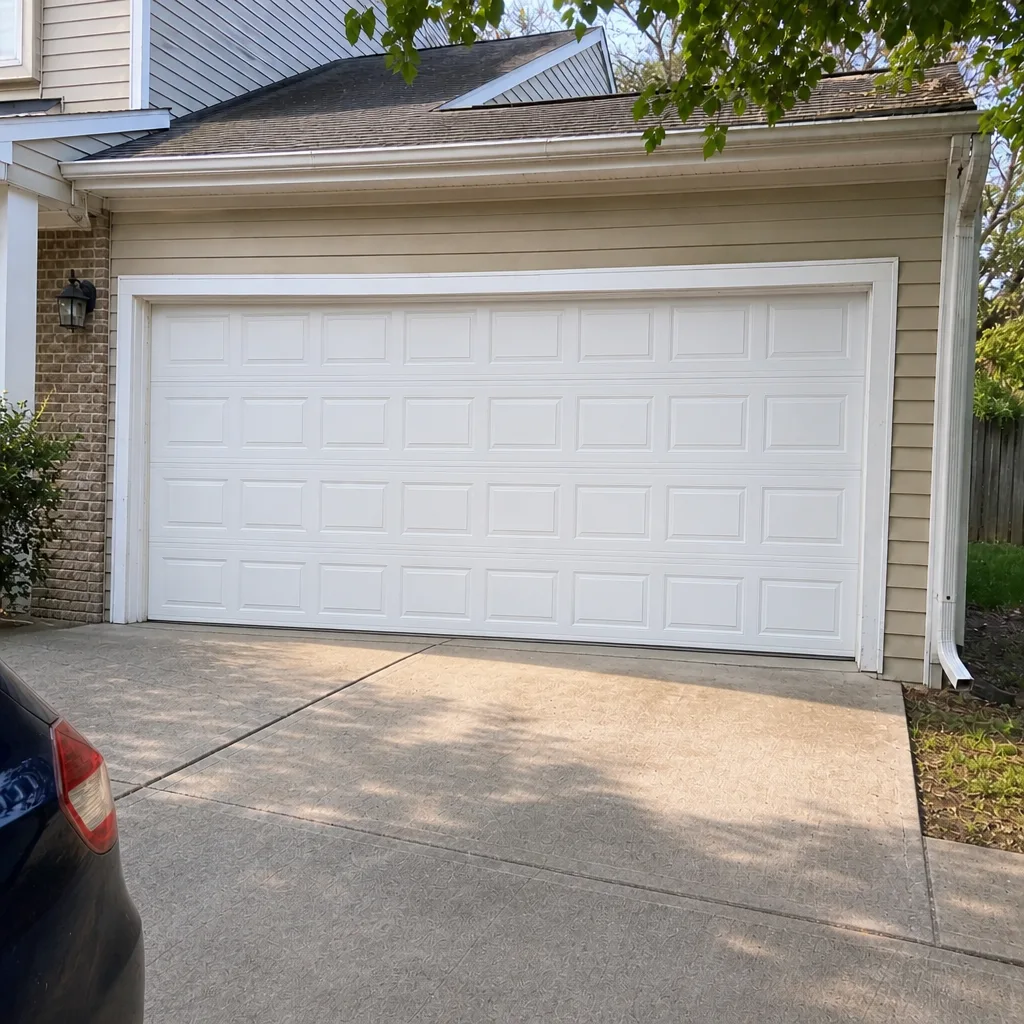 After
When to Call a Professional
Some problems are safe to observe from a distance and some need a technician. Call a professional when a spring has snapped, a cable is off its drum, the door hangs unevenly, or the opener runs but the door doesn’t move. Call when the door seems dangerously heavy to lift or won’t stay in position when raised. Call if you hear repeated loud noises, grind, or scraping, or if the door reverses erratically. Call before replacing an opener if you’re unsure what your door needs. And call before ordering a new door if you want the right material and a repair-versus-replace read from someone who works on your existing brand. Meadow Garage Door Repair offers free estimates in Columbia. Call (888) 721-9522. We answer 24/7. Fast dispatch from 7am to 7pm, Sunday through Friday. Our technicians have up to experience on doors and openers from LiftMaster, Chamberlain, Genie, Clopay, Amarr, Wayne Dalton, Craftsman, and Raynor.
Frequently Asked Questions
Repair is the right call when the door’s structure is sound and one component has failed; replacement makes sense when panels, springs, and hardware are all failing together or the door is badly damaged. Look at panel straightness, rust, track alignment, and how many parts are near end of life. A repair specialist should diagnose before recommending anything. Call (888) 721-9522 for a free estimate – we can tell you which path fits your door.
Most Columbia villages do, yes. Howard County-area village covenants typically govern garage door style, color, and sometimes window configuration, and architectural review takes time. Confirm your village’s specific guidelines with your community association, then get written approval before ordering. We ask about HOA status before quoting installation, because it changes what we can recommend. Call (888) 721-9522 to talk through your project.
Insulated steel holds up best for most Columbia homes, because it resists the humidity, heat, and freeze cycles that warp wood and stress lighter materials. Aluminum is rust-resistant but dents easily; wood looks great but needs regular sealing here; composite and fiberglass offer solid moisture resistance. Whatever you choose, match it to your village covenant. Ask us for a material recommendation for your specific home – estimates are free.
Older homes often have legacy wiring, outdated safety sensors, or no wiring path for modern smart features, which is why a new opener won’t always just plug in and pair. Sometimes it’s a wiring fix, sometimes a sensor retrofit, sometimes the opener itself needs replacing. A specialist can diagnose which. Call (888) 721-9522 and we’ll sort out what your setup actually needs.
Spring repair is one of the most common same-day jobs, and we aim to get you back in working order as fast as possible. Springs and cables are dangerous to handle yourself, so don’t force the door. Call (888) 721-9522. We answer 24/7, with fast dispatch from 7am to 7pm, Sunday through Friday. Estimates are free, and the price is agreed before any work starts.
Yes, we work with licensed and insured independent professionals who specialize in garage door and opener repair and installation. Our technicians have up to experience and work across the major brands, including LiftMaster, Chamberlain, Genie, Clopay, Amarr, Wayne Dalton, Craftsman, and Raynor. Call (888) 721-9522 for a free estimate on your door or opener.
The Bottom Line
Garage door decisions in Columbia aren’t generic. Village HOA covenants set your style and color options, the humidity-heat-freeze cycle steers your material choice toward insulated steel or well-sealed alternatives, and the age of the housing stock shapes what your opener can handle. Repair first when the door is structurally sound and one part failed. Replace when the whole system is at end of life. Keep springs and cables in the hands of a trained professional. And when you call, work with someone who knows your brand and diagnoses before recommending replacement. That approach protects your wallet and keeps your door doing its job.
For repair, opener service, or a new door, Meadow Garage Door Repair offers free estimates in Columbia. Call (888) 721-9522. We answer 24/7. Fast dispatch from 7am to 7pm, Sunday through Friday. One call covers it, whether your door needs a fix today or a replacement later.
Written by the team at Meadow Garage Door Repair.