
Last updated November 16, 2026
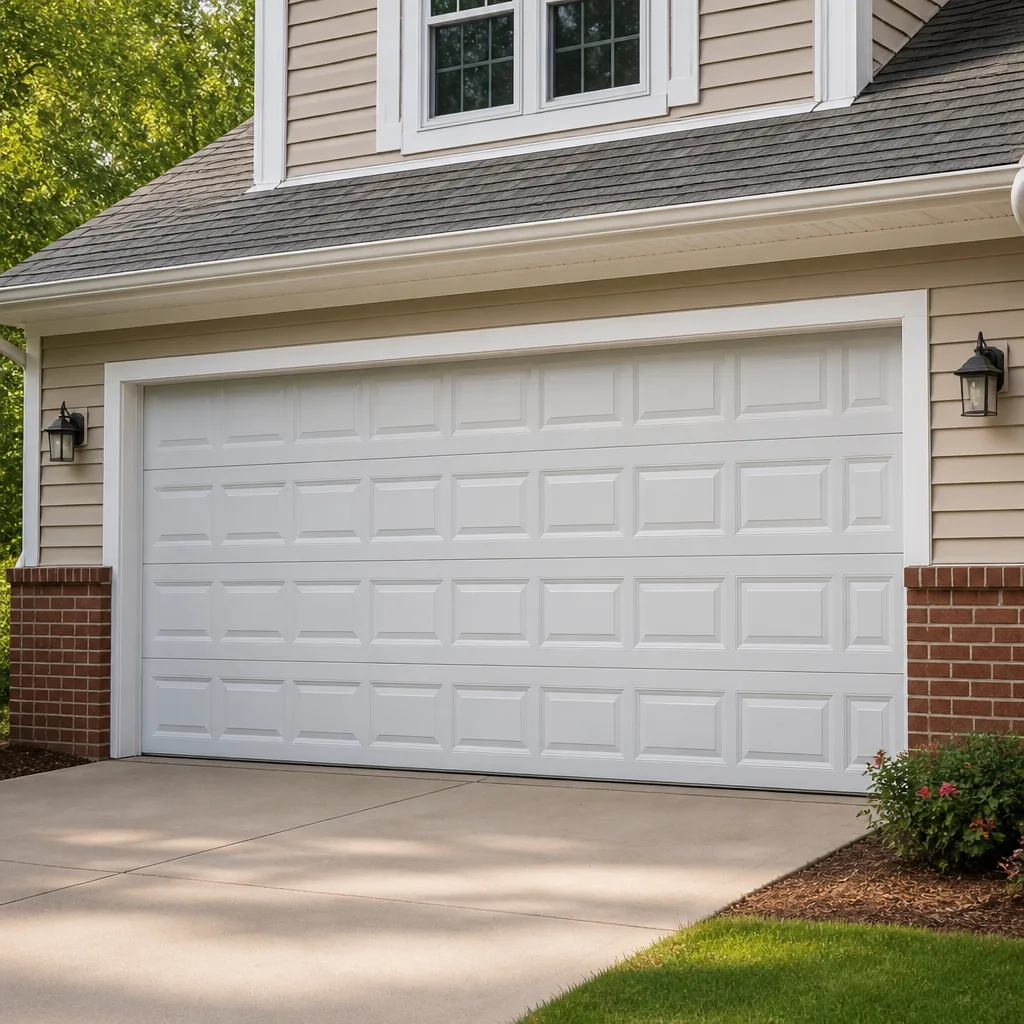 Raised-panel steel
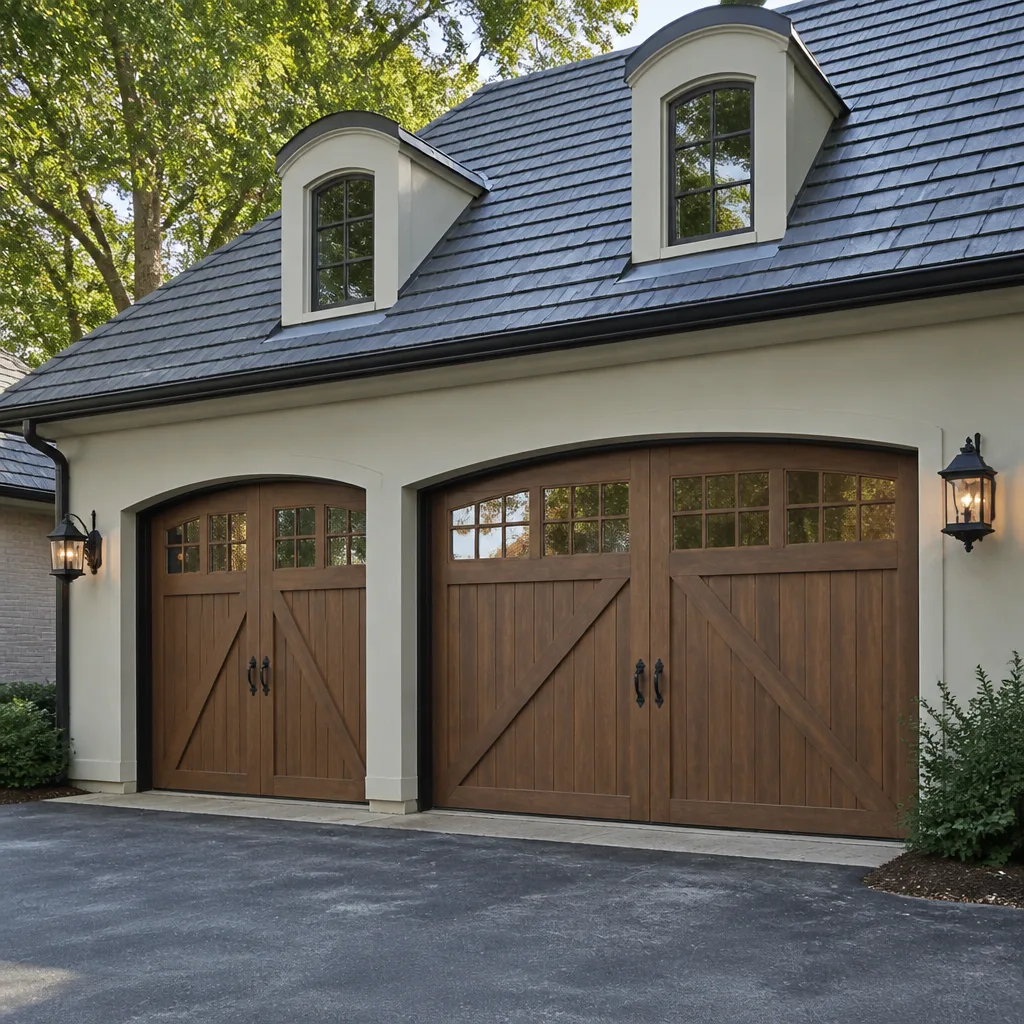 Carriage house
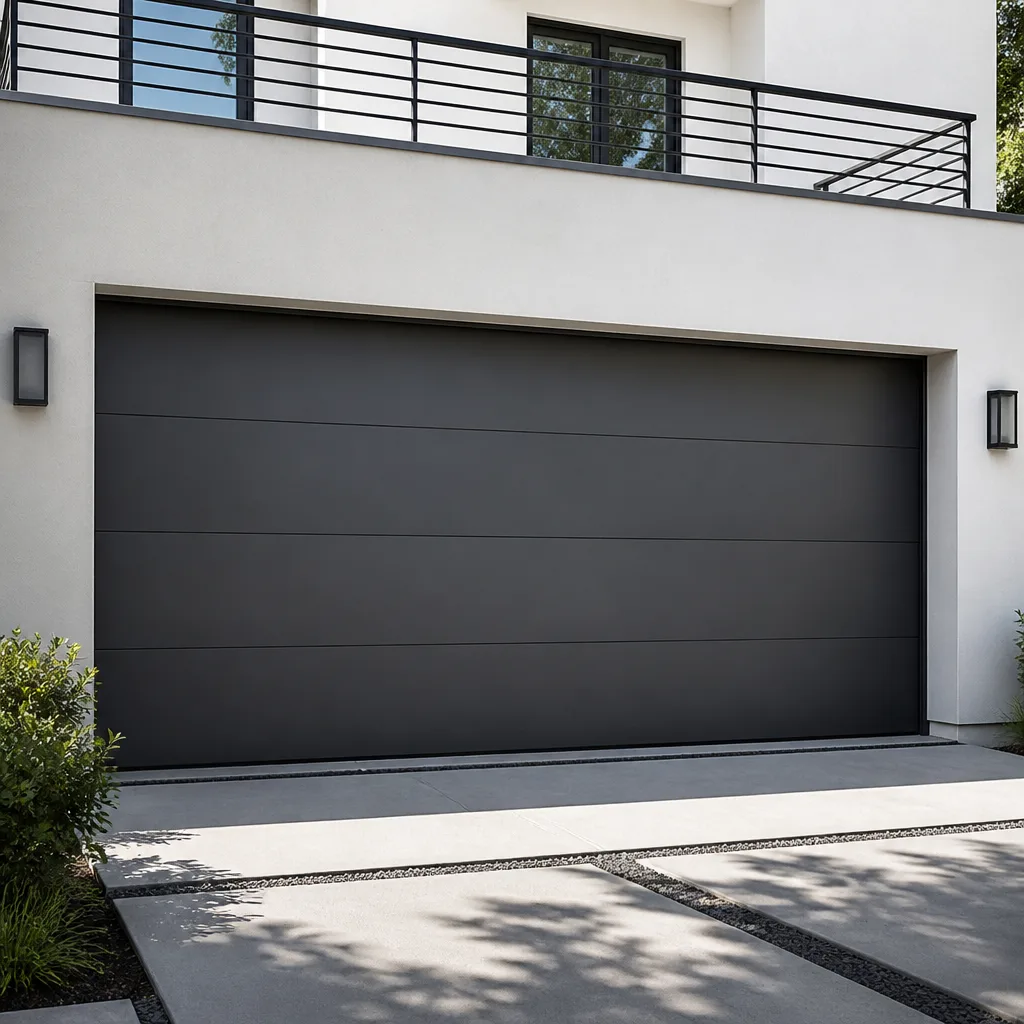 Modern flush
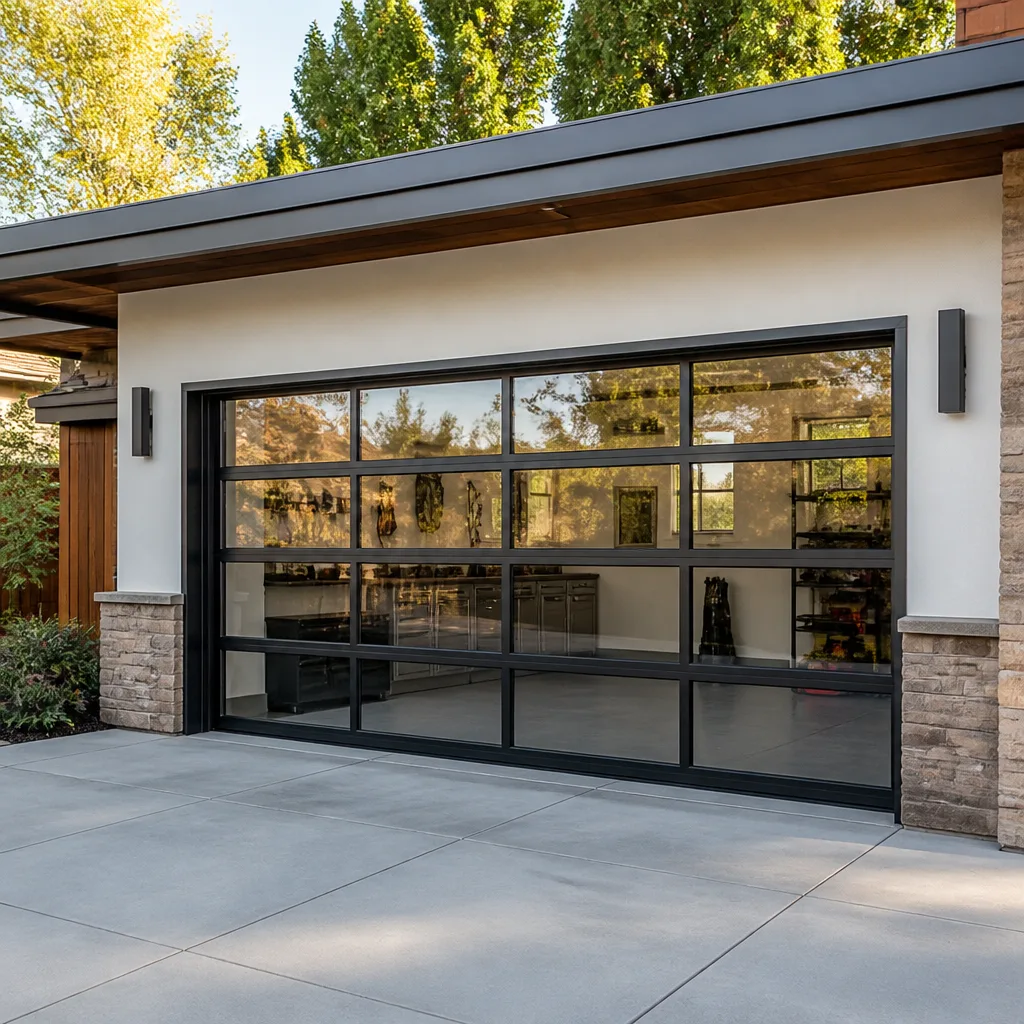 Full-view glass
 LiftMaster openers
 Chamberlain openers
Full 25-point door and opener safety check with every visit - springs, cables, rollers, tracks, and your LiftMaster or Chamberlain opener included
You get a price before we start. It does not change when the pro arrives.
Get your free estimateDIY vs Professional Garage Door: The Columbia Homeowner’s Decision Guide
Garage door springs hold 150 to 200 lbs of torque even on a door that looks dead and harmless. That’s the whole reason technicians use winding bars instead of their hands: an uncontrolled release throws metal fast enough to go through drywall, and sometimes through the wall behind it. That isn’t a scare tactic. It’s just what the tension does when nothing is holding it. The DIY-versus-pro question for a garage door gets argued as a skill contest, and it isn’t one. It’s a question of which tasks carry injury or liability consequences so serious that no amount of tutorial-watching changes the risk, and which tasks a capable homeowner can handle without adding danger. This guide maps out exactly which is which, what a wrong turn costs, and how Columbia’s housing stock and county code change the math.
Quick Answer
Safe DIY garage door work covers cleaning, lubricating, tightening visible bolts, testing the safety reverse, and replacing remote batteries or a worn bottom weather seal. Anything involving torsion or extension springs, cables, drums, the counterbalance system, or the opener’s capacitor and high-voltage wiring belongs to a trained technician. In between sits a middle zone – tracks, rollers, panels, and most opener modules – where a homeowner can do the work but should understand the risk first. When a spring or cable is involved, the decision is already made for you.
Styles & brands we work with
- Raised-panel steel
- Carriage house
- Modern flush
- Full-view glass
- LiftMaster openers
- Chamberlain openers
Table of Contents
- Why garage doors aren’t like other DIY projects
- Category 1: Safe DIY tasks
- Category 2: DIY with risks you should understand
- Category 3: Non-negotiable professional territory
- What DIY mistakes actually cost
- What a tutorial can’t teach you about tension
- Howard County code, inspections, and resale
- The middle path: buy the part, hire the labor
Why Garage Doors Aren’t Like Other DIY Projects
You can repaint a cabinet door wrong and fix it. You can install a light fixture poorly and notice the flicker. A garage door’s counterbalance system is a stored-energy machine, and stored energy doesn’t care whether you’ve watched six videos about it. That’s the frame that matters here, and it’s why a one-size-fits-all “DIY vs. pro” answer falls apart the moment you get specific.
Most home repair debates boil down to time versus money. Garage doors introduce a third variable: consequence. A torsion spring that lets go without restraint releases its stored force all at once, and the shaft, drum, and cables become a delivery mechanism for that force. There’s no partial version of that failure. Extension springs on older single-car doors have their own history, which is why the safety-cable retrofit became standard practice long ago.
The second thing that separates garage doors is how much the machine hides. The spring you can see is not the whole system. Tension is set by how many turns the spring carries, and that number is invisible once the door is on. A homeowner can match a spring’s color code and dimensions perfectly and still set tension wrong, because the visible part was never the hard part.
Columbia’s housing adds a wrinkle. A large share of the town’s housing was built in planned villages across the 1960s through the 1990s, so a lot of doors and openers in Columbia are now on their second or third spring and their first or second opener. Older hardware plus original tracks plus a homeowner who’s never touched any of it is a different starting point than a new-build door. Age alone doesn’t make a job dangerous, but it does mean more of the hidden parts are already stressed before you start.
So the question isn’t “am I handy enough?” It’s “does this specific task have a failure mode I can’t recover from?” Answer that honestly, task by task, and the decision makes itself.
Category 1: Safe DIY Tasks You Can Do Yourself
These tasks need a ladder, some basic tools, and patience, but no special training. The failure mode of a mistake here is a door that still opens, or a noise that comes back. Nobody’s getting hurt.
- Lubricate the moving parts. Rollers, hinges, the torsion shaft bearings, and the opener’s chain or belt all want periodic lubrication. Use a garage door lubricant, not WD-40 as a substitute. A properly lubricated door on a Columbia street runs quieter and puts less strain on the opener motor.
- Tighten visible bolts and hinge screws. Vibration loosens hardware over time. Grab a socket set and check the hinges, the track brackets, and the roller stems. Snug, not torqued.
- Test the safety reverse. Place a 2×4 flat on the floor under the door and close it. The door should reverse on contact. If it doesn’t, the opener needs adjustment before anyone uses it again.
- Test the photo-eye safety sensors. Wave an object in front of the sensors while the door is closing. If the door keeps going, stop using the opener until it’s fixed.
- Clear the tracks of debris. A stiff brush and a rag take care of the grooves. Don’t bend the track trying to clean it.
- Replace remote and keypad batteries. Simple, and often the real answer when a remote stops responding.
- Replace a worn bottom weather seal. On most doors this slides out of a retainer and slides back in. Keeps rain and cold air out, which matters on the exposed sides of a Columbia home facing open village green space.
- Touch up rust and paint on steel panels. A little sanding and painter’s touch-up slows corrosion and keeps the door looking decent.
None of this requires shutting the door off at the breaker or working above your head near a tensioned part. That’s the dividing line. If a task keeps you at floor level with hand tools and no stored energy is in play, it’s fair game. If you’re eyeing a task where a single slip means the door comes down, step back and call garage door repair instead.
Category 2: DIY with Risks You Should Understand
This middle category is where most homeowners get into trouble. These jobs are doable for someone with good mechanical sense, but each one has a specific failure mode worth understanding before you start. They aren’t free.
- Roller replacement. Straightforward, but a door under tension with one roller removed is supported unevenly. If the door isn’t clamped and the opener isn’t disconnected, releasing a bound roller can let the door shift. Do it with the door in the down position and the opener released.
- Track realignment. A slightly bent track can be bent back, but a track that’s badly out of alignment usually means something else moved – a bent hinge, a broken roller, a worn bearing plate. Bending the track back without fixing the cause produces a door that binds, drags the opener, and wears out the motor.
- Opener logic board and module replacement. If you’ve confirmed the problem is a board or module and not a motor or tension issue, swapping the part is a plug-and-play job on many models. The risk is misdiagnosis. Replacing a logic board when the real problem is a strained door and motor isn’t a money problem, it’s a wasted afternoon.
- Panel replacement on a sectional door. Individual panels can be swapped, but the new panel has to match the door’s weight and profile. A mismatched panel changes the balance of the whole door, which then fights the opener. In Columbia’s older villages, matching a discontinued panel profile often isn’t possible – which is the moment many homeowners realize they need to call a specialist rather than keep ordering samples.
- Adding a smart-home opener module. Usually low-risk as long as it’s approved for your opener. On a Craftsman or LiftMaster unit that’s a few years old, confirm compatibility before ordering – and confirm your Wi-Fi signal reaches the garage, not just the house.
The pattern across all five: the physical task is manageable, but the diagnosis is where difficulty hides. Most of these jobs go sideways when a homeowner replaces the wrong part, then has to undo the replacement and buy the right one. That’s the difference between doing this work yourself and doing it well.
Category 3: Non-Negotiable Professional Territory
Some tasks have a failure mode that a homeowner cannot safely recover from. This isn’t a liability disclaimer. It’s mechanical fact. If the task appears here, the risk isn’t reduced by preparation or confidence.
- Torsion spring replacement. The spring above the door stores enough force that removing it requires two winding bars, deliberate moment-by-moment control, and knowing how many turns to unwind before the bars can be swapped. A spring that releases unchecked turns the shaft, the drum, and the cables into projectiles. No video makes this a homeowner job.
- Extension spring replacement. Same physics, different geometry. Extension springs alongside the track carry stored tension too. The retrofit safety cable that should run through the center of the spring isn’t a decoration; if it’s missing or damaged, the spring is already one failure away from becoming a hazard.
- Cable and drum work. Cables carry the door’s weight across the drums. A cable that slips off or snaps under load can cut, and there’s no version of working on cables under load that’s safe for someone without the training.
- Counterbalance adjustment. The number of turns on the spring is set against the weight of the door. Getting it wrong doesn’t just make the door heavy. It overloads the opener motor, wears the cables, and shortens the life of every part in the system.
- High-voltage opener wiring and capacitor work. If the opener has a bad capacitor, a burned-out motor winding, or a wiring fault that presents at the breaker, the work requires opening a unit that holds voltage and puts you into the panel or the ceiling box. This is genuine electrical territory, and it’s the part of opener repair that goes past swapping modules.
- Full door replacement. Even when the removal is straightforward, getting the new door’s torsion set, the tracks squared, and the opener matched is a job that weighs the whole installation against the resistance the door was engineered for.
We’re brand-agnostic on this: whether your door is a Raynor, a Clopay, or a Chamberlain opener on top, we hedge nothing on this category. It’s the same answer every time. If torsion springs, cables, drums, or a high-voltage motor job are on your list, call (888) 721-9522 and let a technician handle it. We answer 24/7. Fast dispatch from 7am to 7pm, Sunday through Friday.
What DIY Mistakes Actually Cost
A DIY mistake on a garage door rarely stays one repair. It usually turns into two or three, because the first mistake causes collateral damage. That’s the part of the math homeowners underweight when they compare the parts receipt against an estimate.
The clean way to think about it is a pair of line items. The first is what you spent on the wrong part. The second is what it costs to repair the damage the wrong part caused when it failed. The first number is easy to estimate. The second number isn’t, because it depends on how far the door got before it stopped working.
Common examples of DIY cost inflation:
- A roller replacement where the wrong-size roller leaves a door binding. The door drags on the opener, the opener overheats in its housing, and the motor burns out. Now there’s a roller job plus a motor job.
- A track bent back without fixing the cause. The door binds, the opener sensor reports an obstruction, and the homeowner replaces the opener before realizing the door was the problem.
- A mismatched panel on a sectional door that throws the whole door out of balance. The spring and opener both strain against the offset. Sometimes the fix is a matched panel; sometimes it’s a door.
- A logic board swapped in without confirming the strain. The new board fails against the same motor problem and takes the new board with it. Two boards, one fixed problem.
- A broken spring left in place with a door that “still works.” It doesn’t work – the other spring takes on all the load, ages years faster, and the door stops working hard, at a time that can’t be scheduled.
- Cleaning the tracks with the wrong solvent or scraping them. A bent track forces a follow-on track and hinge repair that costs more than the cleaning saved.
Pricing depends on the job, so what we do is simple: we quote the work in writing before it starts, and that written estimate is what sets the final price. For any Columbia homeowner planning a repair, that written comparison is the only fair way to weigh a parts receipt against a full job. Call (888) 721-9522 for a free estimate and a side-by-side you can actually make a decision against.
What Watching a Tutorial Can’t Teach You About Tension
Tension is the part of garage door work that can’t be learned from video. This is not a dig at tutorials. It’s about the difference between watching a process and calibrating a feel.
The number of turns on a torsion spring is set against the actual weight of the door, and it’s adjusted one turn at a time as the door is walked through its range of motion. What a technician is listening and feeling for on each pass is how the door behaves near the top of travel, at the midpoint, and near the floor. A door that’s over-tensioned will feel light in the lift but strain going down and slam at the end. A door that’s under-tensioned will lift hard and stop short. Neither one is detectable from a phone camera view.
Extension springs on older single-car doors have a similar trap. Color codes and dimensions can be matched, but the correct spring is set as a pair against the weight. Replacing one extension spring and leaving the other on is a common screwup, and it doesn’t announce itself. It just ages the remaining spring on a faster clock.
What compounds this is that a mis-tensioned door still works, at first. The opener takes on the strain, the motor heats up a little more, the cables wear a little faster, the door gets a little noisier. Nothing fails today. Something fails in a few months, usually when you’re backing out of the driveway. In our experience, that slow failure mode is why a wrong tension job on a Columbia door shows up as an opener replacement down the road, not a spring replacement.
The safest comparison is a fully closed and a fully open cycle with the technician present. Watch where the door hesitates, listen to where it gets loud, and count how many passes the adjustment takes. If you’re ever unsure whether your spring has the correct tension, stop running the door and call for garage door opener repair – the opener takes the strain first, and catching it early is cheaper than waiting.
Howard County Code, Inspections, and Resale
How code interacts with garage door work in Columbia depends on the job. Cosmetic work and maintenance rarely trigger a permit. Structural work – widening an opening, altering the framing around the door, replacing the door with one of a different size – usually does. When a permit is required, the county inspects before the job closes out. Skipping that step is where resale problems start.
The specific question to ask depends on the job:
- Are you replacing a door with one of the same size in the same opening? Most jurisdictions treat this as a replacement, not a structural change, and don’t require a permit. Confirm with the county’s building department before you order the door – the answer can differ for openings that were already non-standard.
- Are you altering the opening, the framing, or the header? That’s structural work. The county will usually want a permit and an inspection.
- Are you adding an opener to a door that never had one? That’s usually a wiring question. If any new circuit is added, that’s a separate permit.
- Is the door and its opener original to a home built in the 1960s through the 1990s? The safety standards have evolved since then, and an original opener plus original spring setup can fail an inspection that a modern door and opener pass without issue.
Where unpermitted work creates the real headache for a Columbia homeowner is resale. When a home goes on the market, an inspector who finds a recently altered garage door opening, an opener installed without matching documentation, or framing changes with no paper trail can flag the work. In a town with this much resale activity, that flag can stall or reprice a sale. The fix at that point is retroactive permit work plus a physical inspection, which is more expensive than the permit would have been.
We don’t issue permits and we don’t sign off on inspections – the county does that. What we can do is quote the work so you know what the job is before you call the building department, and give you the plain-language scope you need to ask them the right question. If you’re planning a replacement and want to be sure the door spec will pass, call us at (888) 721-9522. Our technicians have up to experience across the brands we service, and that includes the doors that have been sitting in Columbia homes since the villages were platted.
The Middle Path: Buy the Part, Hire the Labor
There’s a category of garage door work where buying the part yourself and hiring a technician for labor is genuinely smart. The homeowner avoids the retail markup on the part, and the technician only handles the part that requires skill and insurance. This works when the part is standardized, the diagnosis is already made, and the work itself is the risky part.
The clearest example is opener repair where the diagnosis is confirmed: the logic board, the module, or the capacitor is dead, the part is available, and the homeowner has already verified compatibility. On a LiftMaster or Chamberlain opener that’s a few years old, sourcing the correct board is usually a matter of confirming the model number and the board revision. The labor – opening the housing, disconnecting the wiring, replacing the module, and confirming the door’s cycle – is where the technician earns the appointment.
This also works for a door panel on a common profile, a set of rollers where the size is confirmed, or a bottom seal where the retainer type is known. The pattern: homeowner sources the part, technician brings the tools and the insurance coverage and does the install.
What it doesn’t work for is the counterbalance system. Springs, cables, drums, and winding a proper tension are all technician-side. Buying a torsion spring and hiring labor to install it usually costs more than buying the spring and the labor from the technician together, because the warranty and the accountability belong with the same source. If the spring fails, the homeowner who bought it owns that problem alone.
The middle path also makes the most sense when a homeowner is already calling a technician for a related job. That’s the “one call covers it” part of how we work – repair, opener repair, and installation all sit under one company, so a job that starts as an opener diagnosis and turns out to need a new door only costs one visit. If you’re in Columbia and you’ve already confirmed a part, call (888) 721-9522 and we’ll quote labor-only for the install. Estimates are free, and the price is quoted in writing before any work starts.
Common Mistakes to Avoid
- Buying a spring off the color code alone. The color code tells you the wire gauge and the length; it doesn’t tell you how many turns against your specific door’s weight. A matched spring with the wrong tension is still a wrong spring, and it still strains the opener.
- Replacing one extension spring and leaving the other. On older single-car doors, both springs carry the load together. Replacing one is a false economy because the older spring will fail in a shorter window than if it had been paired.
- Bending a track back without finding the cause. A bent track is usually a symptom. A door that only binds in one spot, or only binds when the opener pulls, is telling you a hinge, roller, or bearing plate has worn. Fix the symptom, the cause fails harder.
- Leaving the opener at the breaker when replacing a logic board. The motor holds stored current, and a board swap on a unit that hasn’t fully discharged can damage the new module on contact. Shut it off, let it sit, and use the correct procedure for the model.
- Skipping the safety reverse test after a panel replacement. A new panel can change the door’s contact profile at the floor. The safety reverse needs to be re-tested after any change to the door’s bottom edge.
- Working on a door in Columbia without checking whether the work needs a permit. Structural changes to the opening are the ones that trip up homeowners at resale. Ask the building department before you order the door, not after.
- Ignoring a slow reverse or a hesitation at the top of travel. In a garage door, hesitation is usually a tension or balance symptom, and it’s cheaper to diagnose early than after something else fails. Our technicians have up to experience reading exactly these signals.
See the difference
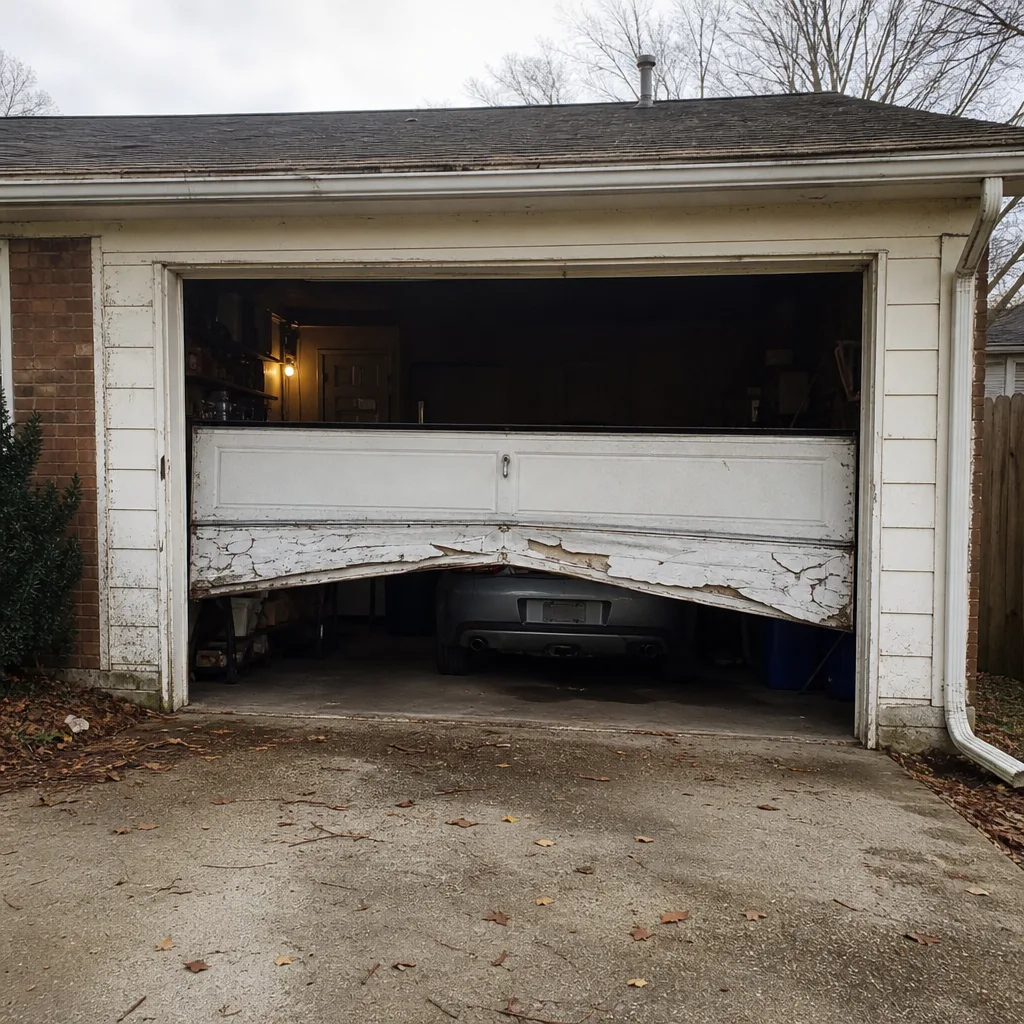 Before
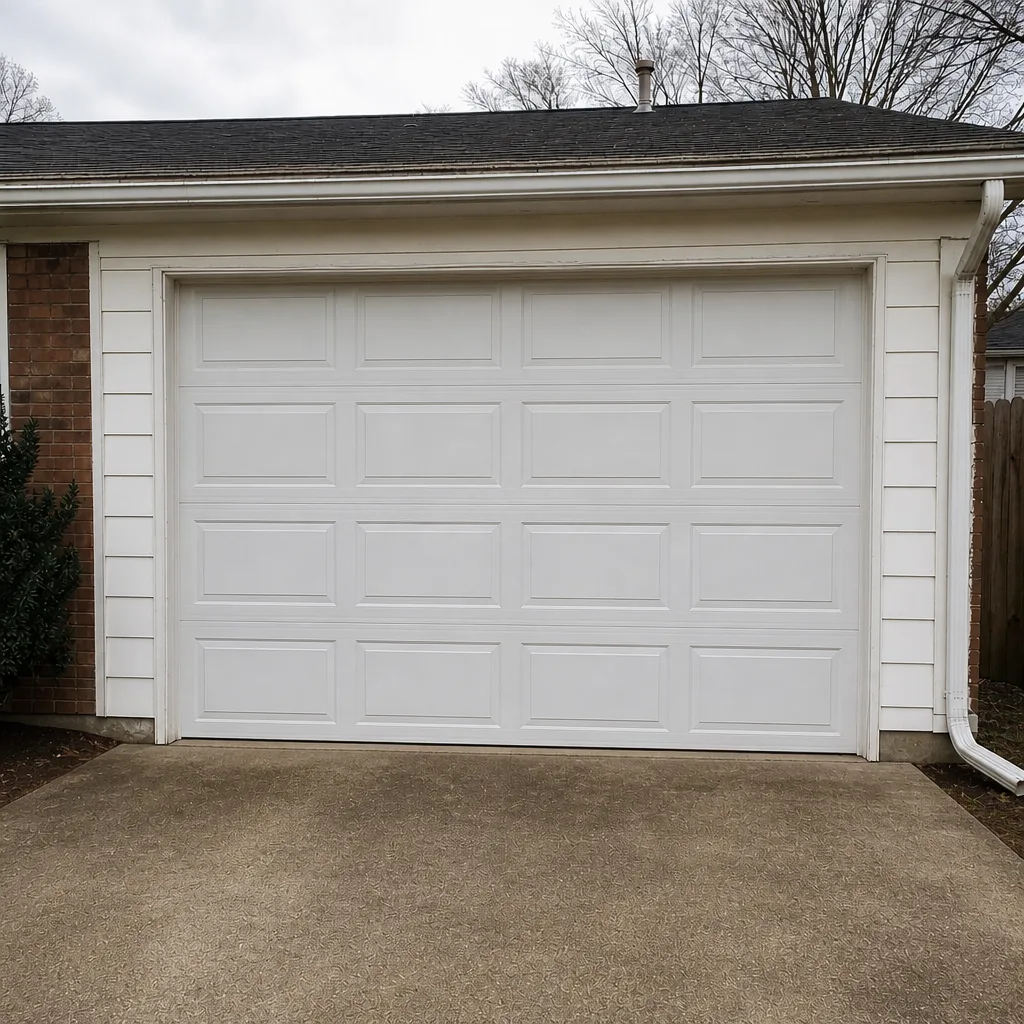 After
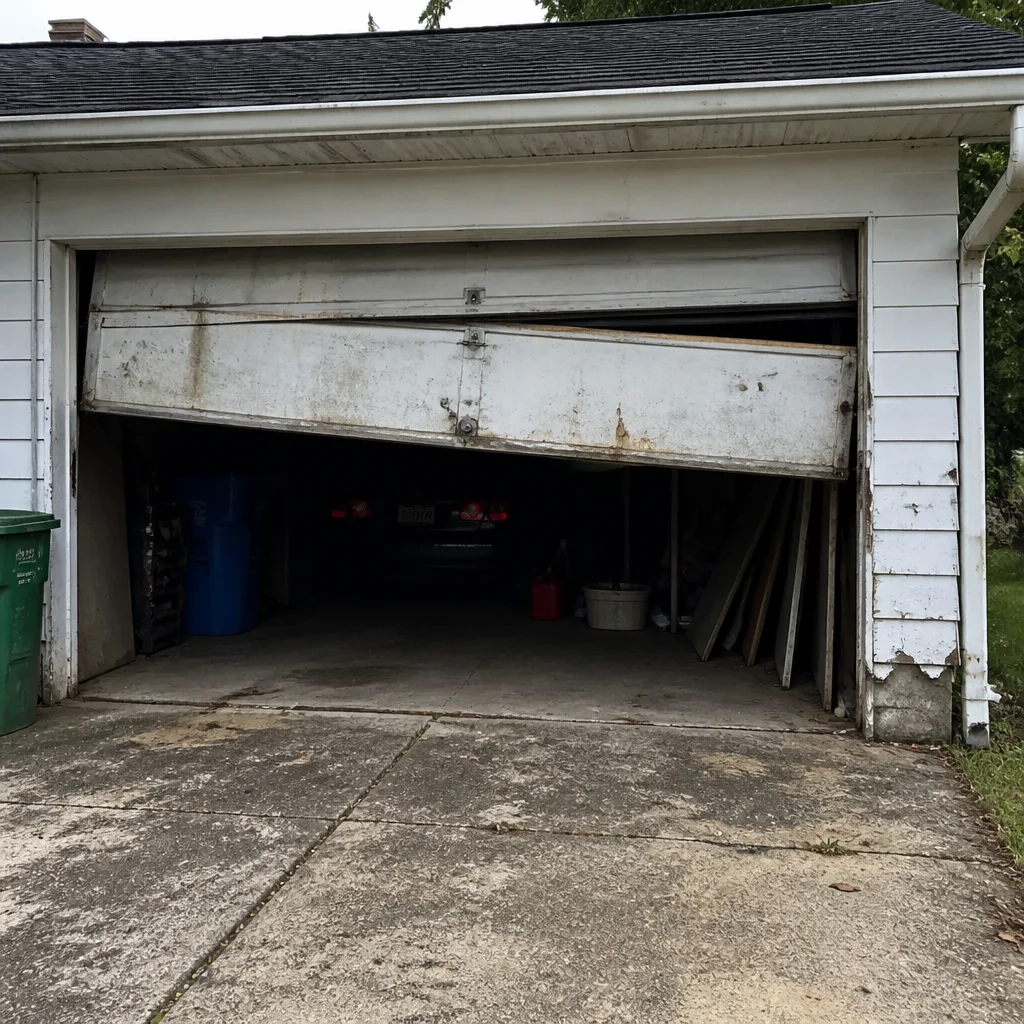 Before
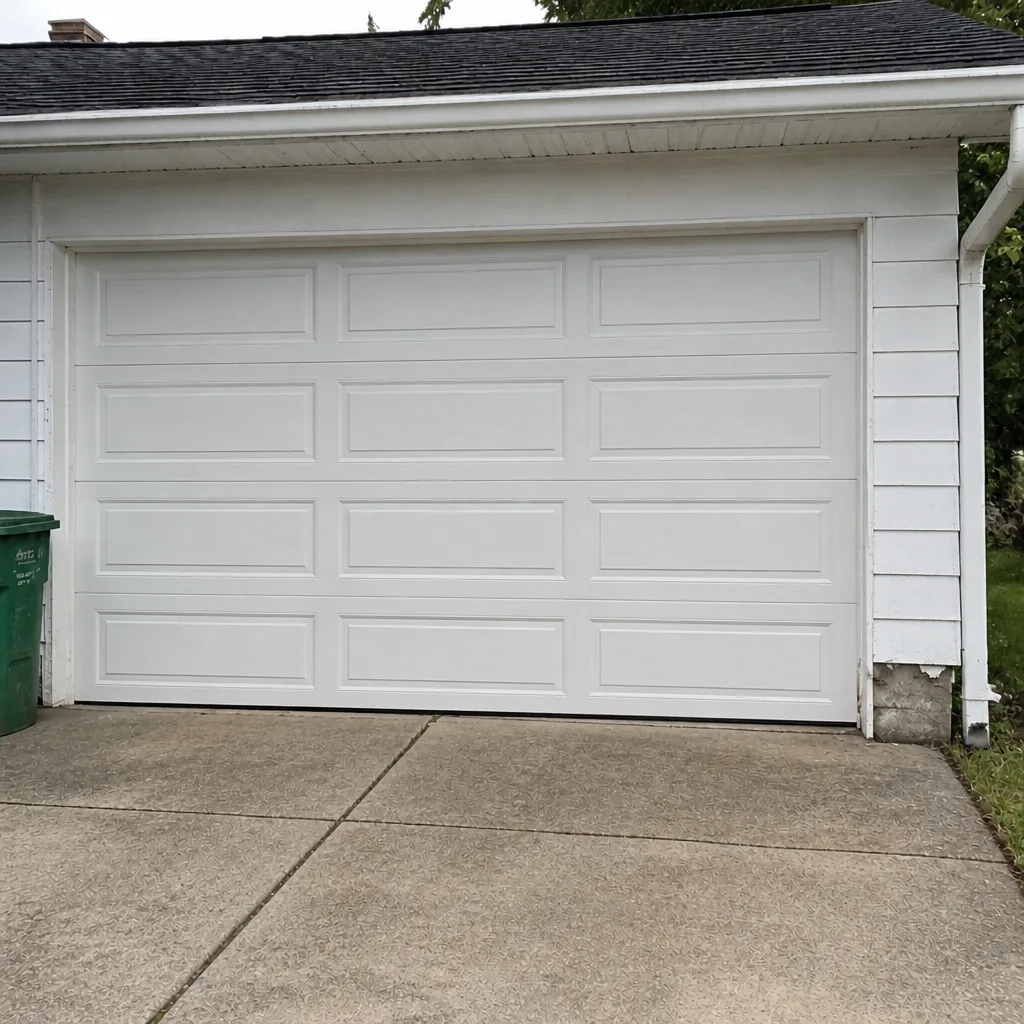 After
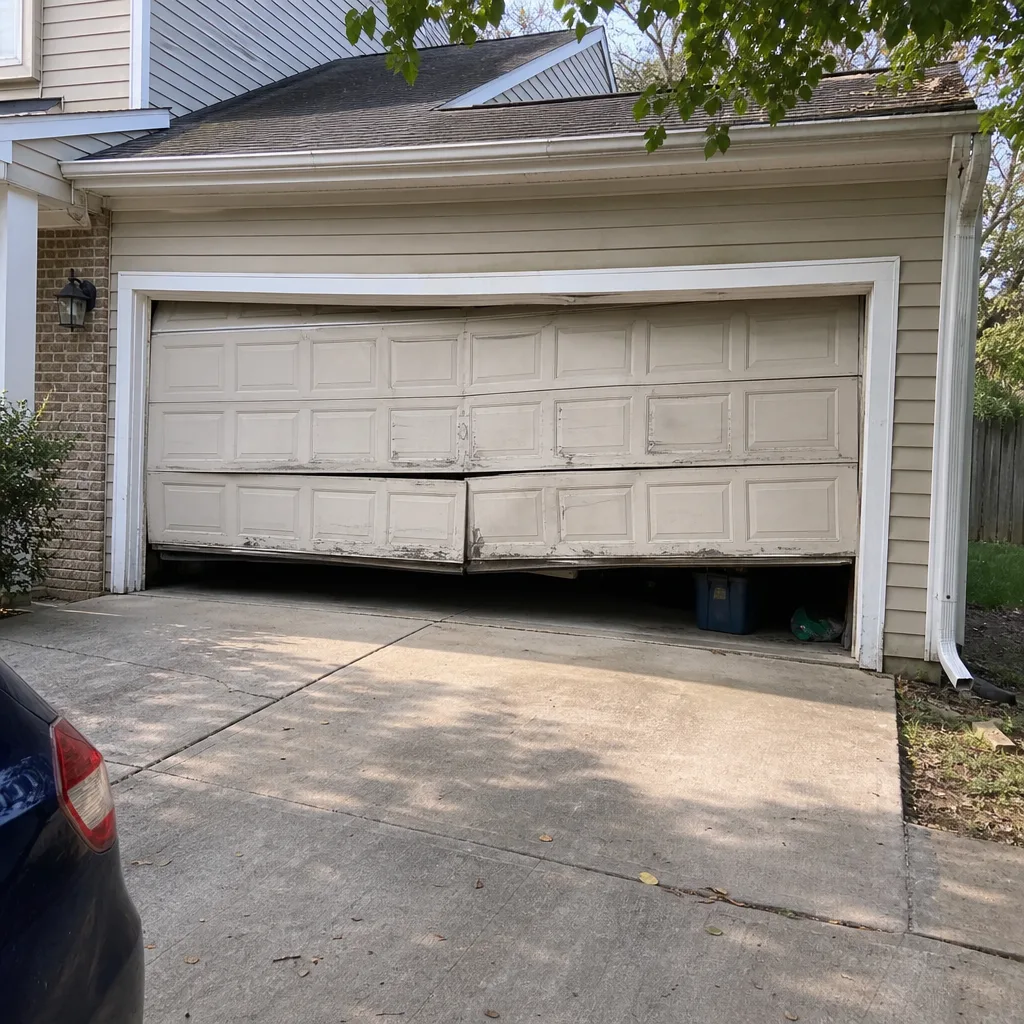 Before
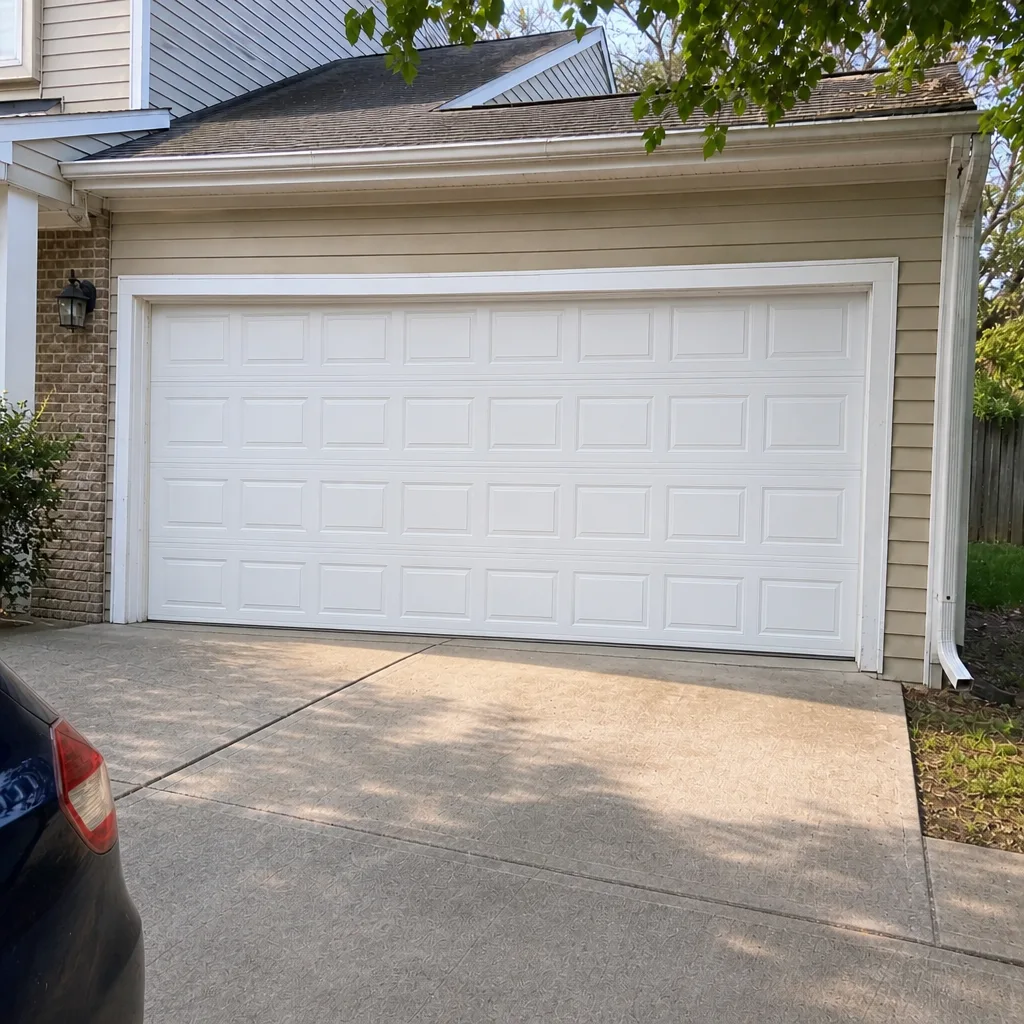 After
When to Call a Professional
Call a professional when the task touches the counterbalance system, a cable or drum, or the high-voltage side of the opener. If a spring has broken, call before you run the door again – a broken spring with an intact one beside it puts all the load on the surviving spring, and that spring is now the failure point. If a cable has slipped or looks slacked, the door is not safe to operate and shouldn’t be opened until a technician sees it. If the opener trips the breaker or the door requires two hands to lift, that’s a technician call as well. Those are the non-negotiables.
Call for a quote when the job is a middle-path project – a confirmed part, an installation, or a door replacement – even if the immediate risk is small. Meadow Garage Door Repair offers free estimates in Columbia, and we work on the brands you already own: LiftMaster, Chamberlain, Genie, Clopay, Amarr, Wayne Dalton, Craftsman, and Raynor. Call (888) 721-9522. We answer 24/7. Fast dispatch from 7am to 7pm, Sunday through Friday.
Frequently Asked Questions
No. Torsion and extension springs both store enough torque to cause serious injury on release, and the correct tension can only be set against the actual door weight – which is a calibration step, not a step-by-step task. This is the one category where we recommend a technician for every homeowner, regardless of mechanical experience. Call (888) 721-9522 for a free estimate; we’ll quote the spring replacement and confirm the tension against your door.
Safe DIY work is limited to tasks with no stored energy in play: lubricating rollers and hinges, tightening visible bolts, testing the safety reverse and photo eyes, replacing remote batteries, and swapping a worn bottom weather seal. If the task keeps you on the floor with hand tools, it’s typically fair game. If it puts you up a ladder near a spring or cable, it belongs to a technician.
Yes, potentially. Unpermitted structural changes to the door opening can flag in a resale inspection, and the fix is retroactive permit work plus an actual physical inspection. Cosmetic work and same-size door swaps usually don’t require a permit, but the county’s building department is the authority on that. Ask them before you order a door if the opening or framing is changing.
A DIY mistake usually turns one repair into two or three, because the wrong part causes collateral damage. A wrong-size roller can burn out the opener. A mismatched panel can throw the door out of balance and strain the spring. The only fair comparison is against a written estimate. Call (888) 721-9522 for a free estimate and get the numbers side by side.
Yes. We service eight major brands – LiftMaster, Chamberlain, Genie, Clopay, Amarr, Wayne Dalton, Craftsman, and Raynor – and our technicians arrive familiar with your specific hardware. We repair what you already own rather than defaulting to replacement, and we don’t push a new door when a repair fixes the problem. Read more about how we approach diagnostics on our Meadow Garage Door Repair page.
Yes, for opener installation labor. If you’ve confirmed the opener is the right model for your door and the electrical side is in place, we’ll quote labor-only for the install. The part is your source; the installation, tuning, and testing are ours. Call (888) 721-9522 for a free labor estimate.
The Bottom Line
The DIY-versus-pro question for garage doors has a short honest answer: springs, cables, drums, tension, and high-voltage opener work go to a technician, every time, no exceptions. Everything else splits along a line you can actually see. If a task keeps you on the floor with hand tools and no stored energy is in play, it’s yours to do. If it puts you up a ladder near a tensioned part or inside the opener housing past the low-voltage modules, that’s the moment to call. Columbia’s older housing stock and Howard County’s permit rules add a second layer: check code before structural work, and don’t let an unpermitted change become a resale problem. The middle path – buying a confirmed part and hiring labor – is the underused option that saves money without adding risk. Get the answer to your specific job in writing before you decide.
For a free estimate in Columbia on a repair, an opener job, or a new installation, call Meadow Garage Door Repair at (888) 721-9522. We answer 24/7. Fast dispatch from 7am to 7pm, Sunday through Friday. We work on the door and opener you already have, and our technicians have up to experience across the brands we service.
Written by the team at Meadow Garage Door Repair.