
Last updated November 16, 2026
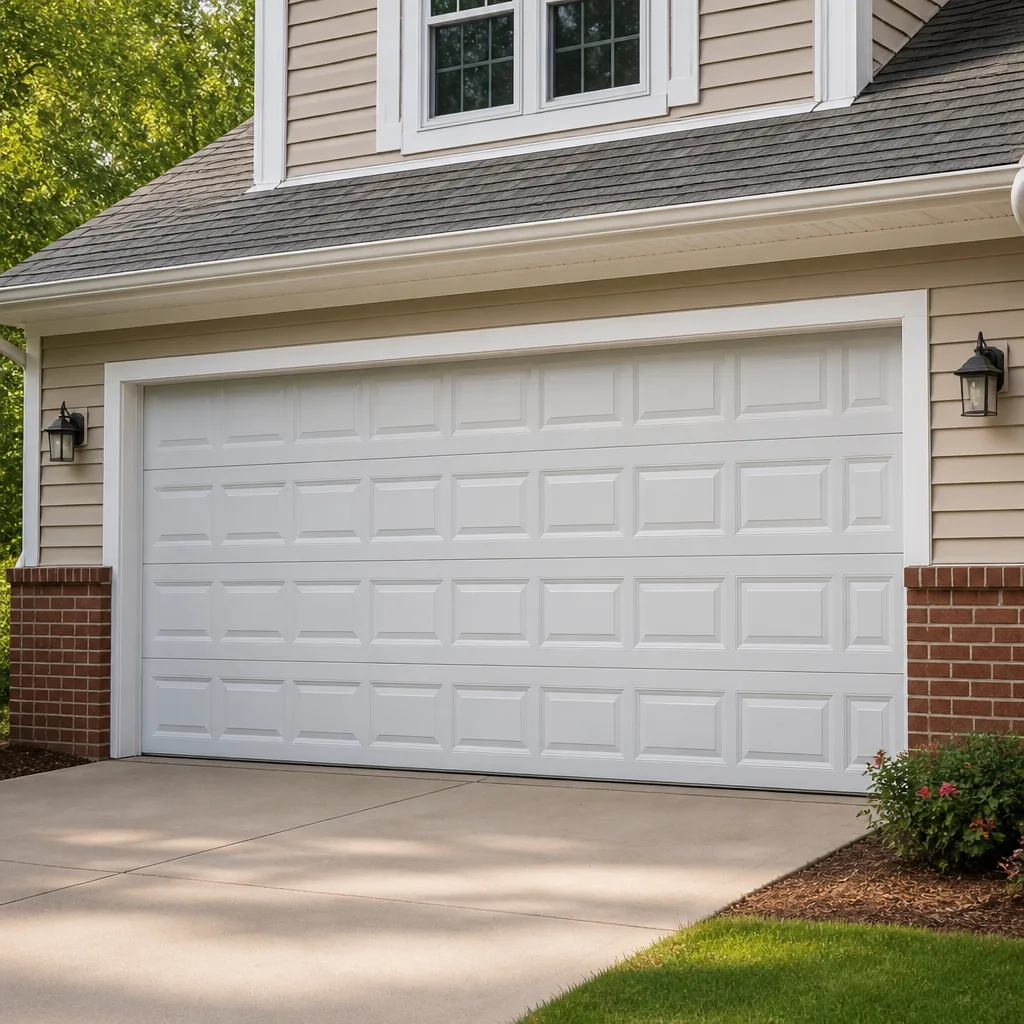 Raised-panel steel
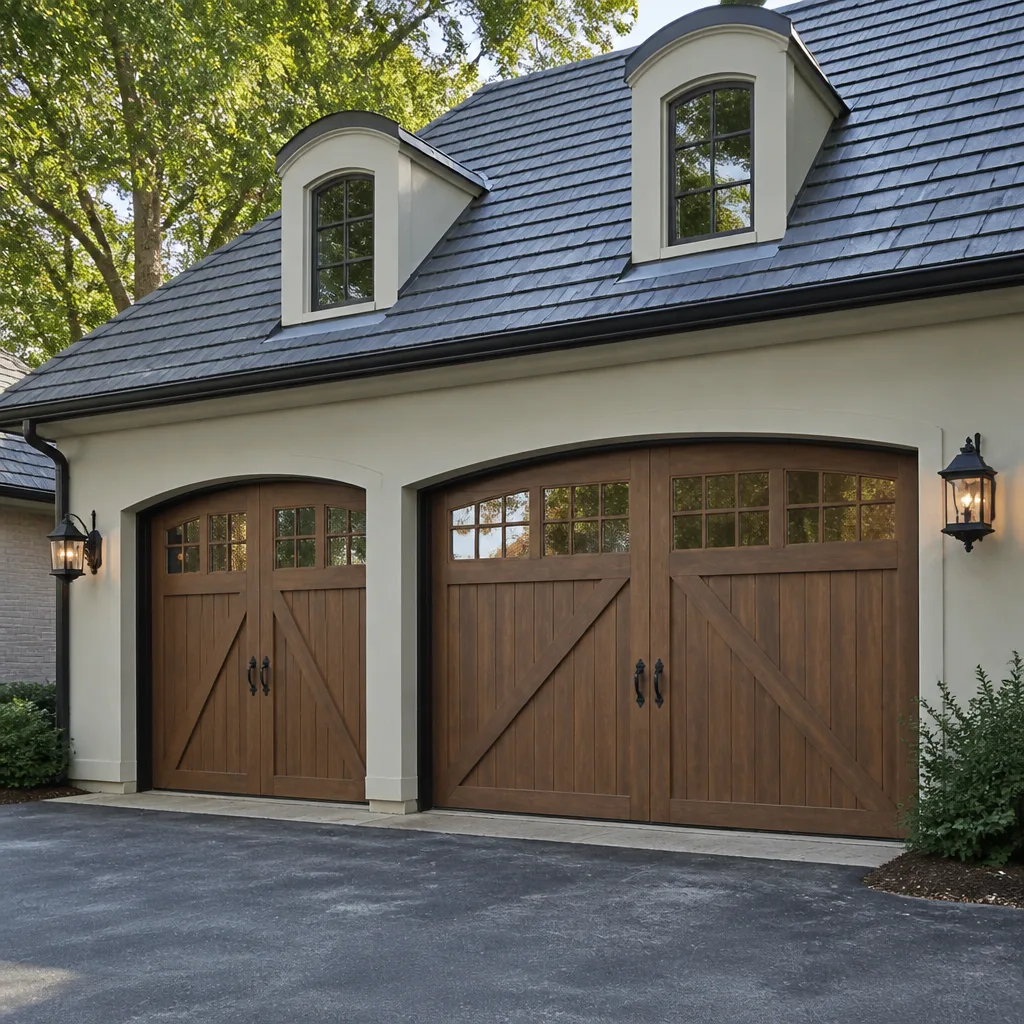 Carriage house
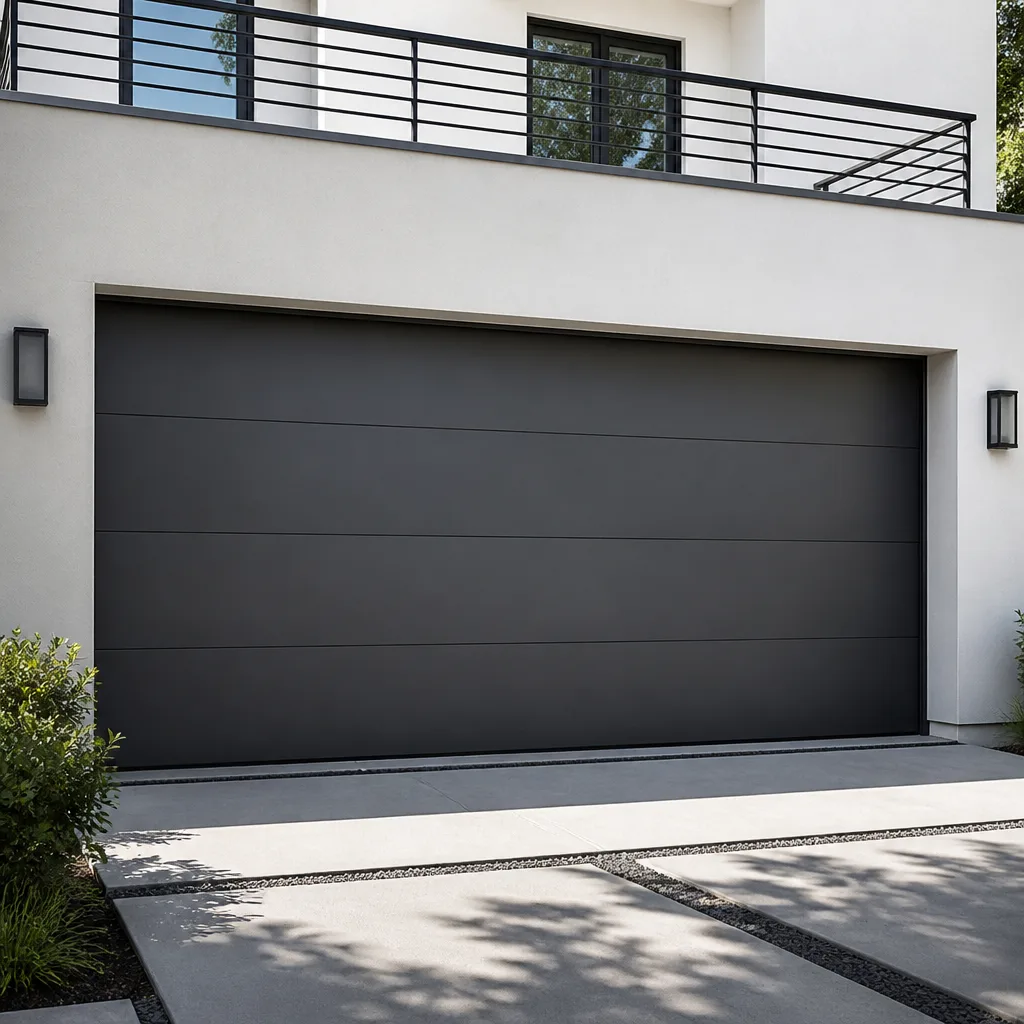 Modern flush
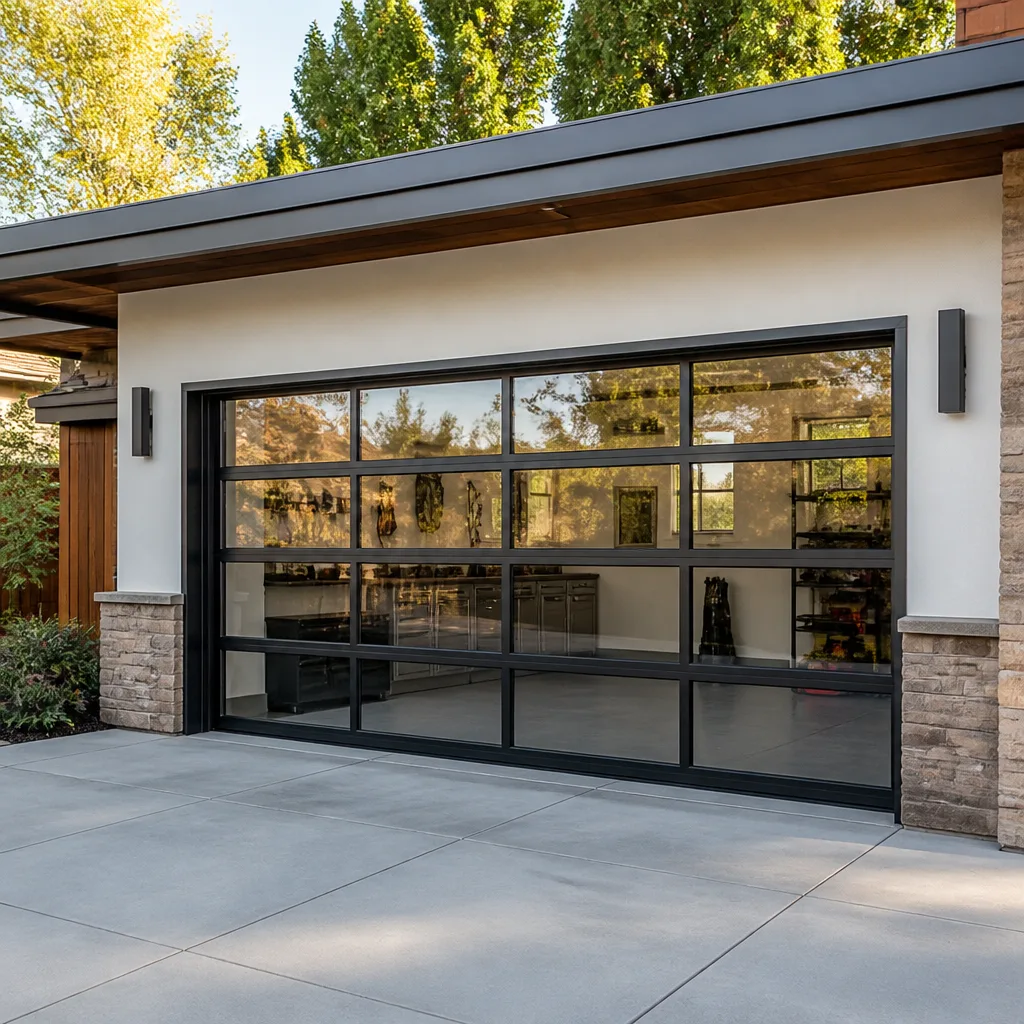 Full-view glass
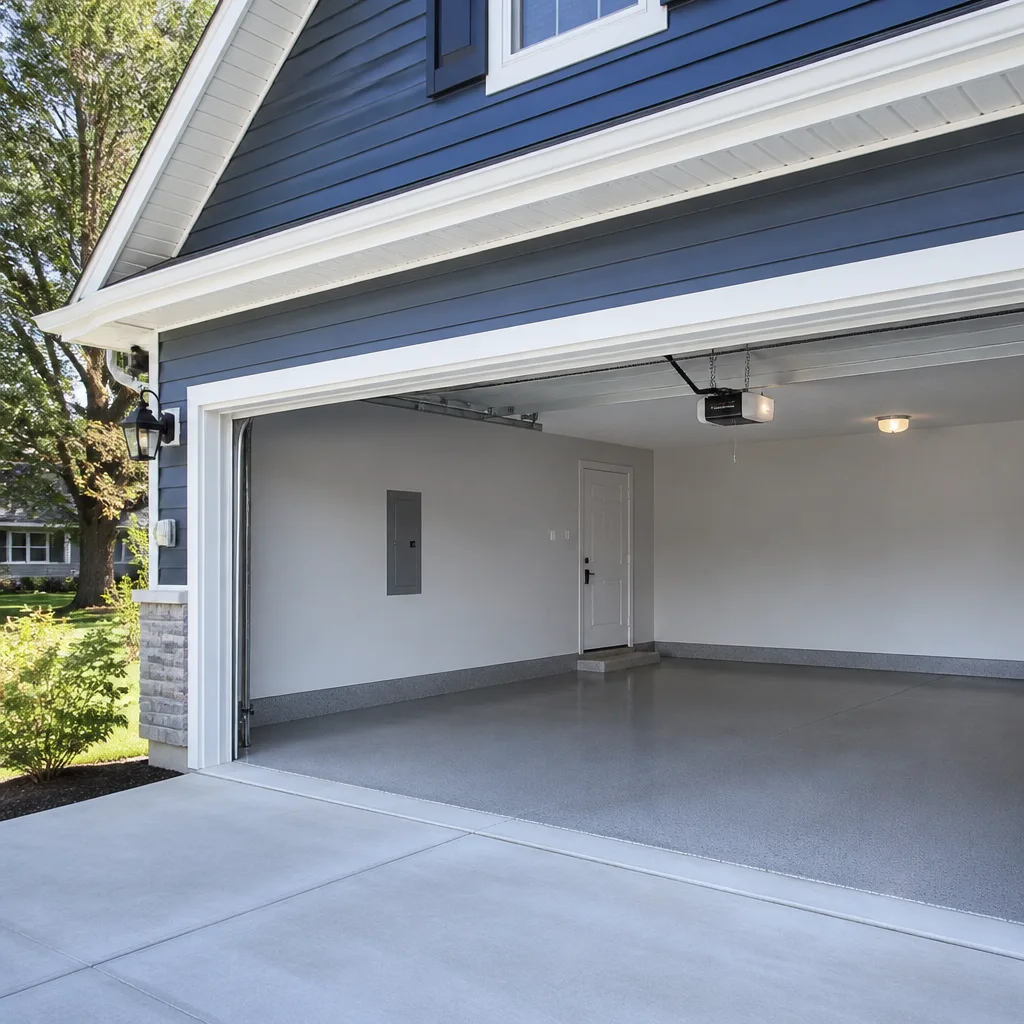 LiftMaster openers
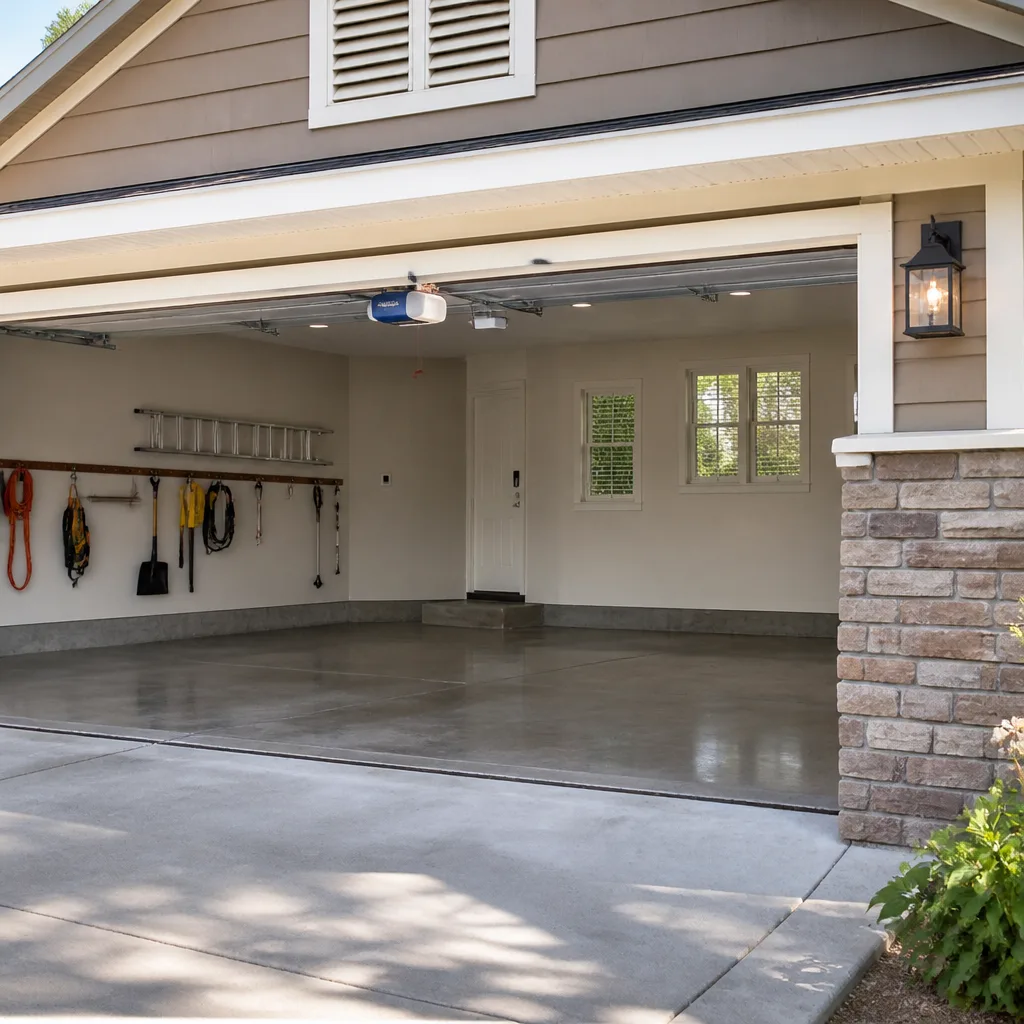 Chamberlain openers
Full 25-point door and opener safety check with every visit - springs, cables, rollers, tracks, and your LiftMaster or Chamberlain opener included
You get a price before we start. It does not change when the pro arrives.
Get your free estimateGarage Door Permits, Codes & Inspections in Columbia, MD: What You Need to Know
Most garage door work in Columbia needs no permit at all. That surprises homeowners who call us expecting paperwork, and it’s the first thing we explain. But the two situations that do require a county permit are exactly the ones people tend to skip, and that gap has a way of surfacing years later during a home sale inspection. This guide walks through Howard County’s actual permit thresholds, what fire-rated door requirements mean for attached garages, how the UL 325 safety standard applies to older openers, and why HOA approval and county permits are two separate conversations in Columbia. We’ll also cover what unpermitted work costs to fix once it’s flagged, so you can decide before you build, not after.
Quick Answer
In Columbia, MD, routine garage door repairs, spring replacements, panel swaps, and opener component fixes generally do not require a Howard County permit. A permit is typically triggered by a full door replacement on an older home, or by an opener installation that involves new electrical work. Fire-rated door requirements for attached garages and UL 325 safety compliance apply to every door and opener regardless of permit status, and Columbia’s village associations may require separate architectural approval before any exterior change. When in doubt, ask the Howard County Department of Inspections, Licenses and Permits directly – it’s a free question and it protects your home sale.
Styles & brands we work with
- Raised-panel steel
- Carriage house
- Modern flush
- Full-view glass
- LiftMaster openers
- Chamberlain openers
Table of Contents
- What Triggers a Garage Door Permit in Howard County
- What Definitively Does Not Require a Permit
- How Unpermitted Garage Door Work Surfaces During a Home Sale
- Fire-Rated Doors for Attached Garages: The Columbia Gap
- UL 325 Safety Standard: What It Requires and How to Check Older Openers
- HOA Approval vs. County Permit in Columbia’s Villages
- A Step-by-Step Permit and Inspection Walkthrough
- What Permits and Remediation Typically Cost
What Triggers a Garage Door Permit in Howard County
Howard County’s permit threshold for garage door work is narrower than most homeowners assume. The county issues permits for structural and electrical changes to a home, and garage door work only trips that wire when it crosses into one of those categories. A repair never does. A like-for-like replacement on a newer home usually doesn’t either. What does trigger the permit process is a full door replacement where the opening, header, or structural framing changes, and any opener installation that requires a new dedicated circuit, outlet, or hardwired connection.
Here’s the practical breakdown we walk Columbia homeowners through:
- Structural changes to the opening: Widening a garage door opening, replacing a header, or reframing for a different door size requires a building permit. These affect the load-bearing structure of the wall.
- New electrical circuits for openers: If the opener needs a new outlet or dedicated circuit run from the panel, that’s electrical work and typically requires a permit and inspection.
- Full replacement on an older home: Homes built before the current code cycle often have non-compliant fire separation details. A full door replacement may prompt the county to require those details be brought up to current standards.
- Converting a garage to living space: This is a larger permit project that changes the garage door entirely and adds insulation, HVAC, and egress requirements.
If you’re replacing a door on a home of a certain age in Columbia, the safest move is a phone call to the county before you order. Ask specifically whether the door replacement triggers a fire separation inspection. It’s a two-minute question that saves weeks of back-and-forth later. Our garage door repair technicians can tell you what we see on a standard replacement, but the county makes the final call on permits. We don’t issue them and we don’t waive them.
What Definitively Does Not Require a Permit
The vast majority of garage door work in Columbia is repair, and repair does not require a Howard County permit. Spring replacement, cable replacement, roller and hinge swaps, panel repair, track realignment, weather seal replacement, and opener component repair all fall outside the permit process. These are maintenance and repair operations on existing equipment, not structural or electrical changes to the home.
Common no-permit jobs we handle across Columbia:
- Torsion and extension spring replacement (one spring or a matched pair)
- Lift cables, drums, and bottom bracket replacement
- Panel replacement on a damaged section without changing the opening
- Roller, hinge, and track hardware replacement
- Opener motor, gear, capacitor, and logic board repair on existing wiring
- Remote and keypad reprogramming, including LiftMaster, Chamberlain, and Genie systems
- Safety sensor realignment and UL 325 compliance adjustment
- Weather stripping and bottom seal replacement
Remote and smart-home integration work falls firmly in the no-permit column. If you’re pairing a Chamberlain MyQ hub or reprogramming a Genie Intellicode remote, there’s no electrical permit involved because you’re not altering the home’s wiring. The same goes for tune-ups and safety inspections. If you want a technician to walk through your door and opener and tell you what’s wearing out, that’s a service call, not a permit project.
The one caveat: if a repair uncovers a structural problem – a rotten header, a shifted jamb, cracked masonry around the opening – that discovery may push the job into permit territory. We flag those when we see them so you can call the county before the scope expands.
How Unpermitted Garage Door Work Surfaces During a Home Sale
Unpermitted garage door work has a habit of showing up at the worst possible moment: the buyer’s home inspection. Howard County real estate transactions include a permit history search, and a garage door replacement or opener installation without a corresponding permit record can raise a red flag. The inspector notes the discrepancy, the buyer’s agent asks for documentation, and the seller is left scrambling to prove the work was done to code or to remediate it before closing.
What remediation typically looks like depends on what was done:
- The county reviews the work. An inspector visits and determines whether the installation meets current code, including fire separation and UL 325 requirements.
- Deficiencies are documented. Missing permits, non-compliant fire-rated doors, and openers without working safety sensors all get flagged in writing.
- Corrections are scheduled. The homeowner hires a licensed contractor to bring the work up to standard, then the county re-inspects.
- Permits are pulled retroactively where allowed. Howard County allows after-the-fact permits for some work, with a higher fee and sometimes a penalty.
- Closing is delayed or negotiated. The buyer may ask for a credit, the seller may pay for corrections, or the deal stalls.
The delay is the real cost. A permit correction that takes two weeks is two weeks added to a closing timeline, and buyers get nervous. We’ve seen Columbia sellers pay for a second inspection and a rush correction simply because nobody checked the permit history when the door was replaced. If you’re planning a sale in the next year or two, pull your permit records now. The county’s online system makes it straightforward, and it’s better to know than to be surprised at the inspection table.
Fire-Rated Doors for Attached Garages: The Columbia Gap
Attached garages are fire separation boundaries, and the door between the garage and the living space is a life-safety component. Current code requires a fire-rated door assembly on that separation in most configurations, typically a solid-core or rated door with proper sealing and self-closing hardware. Many homes built in Columbia in the 1980s were constructed before the current code cycle, and some of those doors don’t meet today’s requirement.
The gap usually shows up in one of three ways:
- Hollow-core doors: Older homes sometimes have a standard hollow-core door between garage and house. It provides no meaningful fire resistance and fails a modern inspection.
- Missing or failed weatherstripping and threshold seals: A rated door without intact sealing doesn’t perform as a rated assembly. Smoke and fire move through the gaps.
- No self-closing hardware: A door that doesn’t close and latch on its own isn’t providing the separation the code intends.
This matters most when the garage is attached to the house, which is common in Columbia’s village neighborhoods. The code intent is simple: give occupants time to escape a garage fire before it reaches sleeping areas. A hollow-core door with a worn seal doesn’t do that.
We don’t perform fire door replacement or certify compliance – that’s a job for a licensed door or general contractor, and the county inspection is what ultimately confirms it. What we can do is point out when we see a fire separation gap during a garage door service call, so you can address it before it becomes an inspection issue. That’s part of the job, not an upsell.
UL 325 Safety Standard: What It Requires and How to Check Older Openers
UL 325 is the safety standard that governs automatic garage door openers, and it’s been updated several times since the 1970s. The standard requires that an opener reverse or stop when it encounters an obstruction, and modern versions require non-contact safety sensors at the door opening. Every opener installed today must comply. Older openers installed before the standard was tightened may not, and that’s a genuine safety concern, not a technicality.
Here’s how to check an older unit. This is a visual and functional check, not a repair:
- Look for safety sensors at the door opening. Two small units, one on each side, roughly six inches off the floor, with a light beam between them. No sensors means the opener predates the non-contact requirement.
- Test the reversal. Place a roll of paper towels or a 2×4 flat on the floor in the door’s path and close the door. A compliant opener reverses on contact with the object. If it continues down, the opener is failing its safety test.
- Test the sensor. With the door open, wave your hand through the beam. The opener should not close the door while the beam is broken.
- Check the force setting. Openers have a force adjustment. If it’s set too high, the door won’t reverse on a light obstruction. If it’s too low, the door reverses on its own during normal operation.
- Look at the age of the unit. A motor older than about fifteen years may predate current features and is a reasonable point to consider replacement, especially if parts are hard to source.
We work on Raynor and LiftMaster openers regularly, and older units from those brands can often be brought back into compliance with sensor replacement and force adjustment rather than full replacement. But safety sensors that fail repeatedly, or openers with no sensor provision at all, are a replacement conversation. We don’t talk anyone into a new opener to solve a sensor problem. Our garage door opener repair service exists precisely because most opener problems are fixable.
If you’re not comfortable testing an opener yourself, don’t force it. A door that fails the reversal test can injure a child or a pet in the time it takes to walk away. Call a technician and have it checked properly.
HOA Approval vs. County Permit in Columbia’s Villages
Columbia’s village structure means many homeowners face two separate approval processes, and confusing them is one of the most common mistakes we see. A Howard County permit is a government building-code approval. An HOA or village architectural approval is a private covenant approval. They are not the same thing, they are not interchangeable, and in Columbia you may need both – or neither, depending on what you’re doing.
Here’s the distinction:
- Howard County permit: Governs code compliance – structural, electrical, fire separation, UL 325. Issued by the county, inspected by the county.
- Village or HOA approval: Governs appearance and covenant compliance – door color, panel style, window configuration, materials. Issued by the association’s architectural committee, reviewed against the village’s design guidelines.
- Both may apply: A full door replacement that changes the door style or color can require HOA approval for appearance and a county permit for structural or fire-separation reasons.
- Neither may apply: A spring or cable repair changes nothing visible and touches no structure. It needs no HOA approval and no county permit.
Columbia’s villages have their own architectural guidelines, and the review process varies from village to village. A door that’s fine in one village may not be approved in another. Before you order a new door, contact your village association and ask for the current architectural guidelines and the approval timeline. Then check with the county on permit requirements. Do both before the door is ordered, because a special-order door that fails HOA review is a door you own and can’t install.
We help homeowners with the technical side – what door styles and materials are available, what fits the opening, what the hardware requirements are – and we can tell you what we’ve seen approved. We don’t submit HOA applications on your behalf, and we don’t issue county permits. Those are separate processes with separate decision-makers, and the homeowner is the one who needs to make the calls.
A Step-by-Step Permit and Inspection Walkthrough
If your project does require a Howard County permit, here’s the sequence. We’ve walked Columbia homeowners through this enough times to know where it can stall, so the steps below flag the common snags.
- Confirm the permit requirement with the county. Call the Howard County Department of Inspections, Licenses and Permits. Describe the exact work – door replacement, opener installation with new wiring, structural change – and ask what’s required. Get the answer in writing if you can.
- Check HOA requirements separately. Contact your village association and ask for the architectural guidelines. Submit any required application and wait for approval before ordering the door.
- Pull the permit. For contractor-led work, the licensed contractor typically pulls the permit. For homeowner-led work, the homeowner can pull it in some cases, but this varies by scope. Confirm with the county.
- Schedule the work. Once the permit is issued and HOA approval is in hand, schedule the installation. The door should match the permitted scope exactly – a different size or configuration may require an amended permit.
- Schedule inspections. Depending on the permit, the county may require a rough-in inspection (framing, electrical) and a final inspection. The permit documentation will specify what’s needed and when.
- Pass the final inspection. The county inspector confirms the work meets code, including fire separation and UL 325 compliance. Once it passes, the permit is closed and the record exists for future home sales.
- Keep the documentation. Store the permit number, inspection record, and HOA approval with your home records. This is what protects you at resale.
The most common stall points are ordering the door before HOA approval and assuming a repair requires a permit that it doesn’t. Both cost time. A two-minute phone call to the county and a check with the village association prevent both. If you’re in an unincorporated part of Howard County outside a Columbia village, the HOA layer may not apply, but the county permit rules still do.
What Permits and Remediation Typically Cost
Pricing for permit-related garage door work varies by scope, and we don’t quote permit fees as if they were ours to set. What we can share are the typical ranges we see for garage door work in the Columbia market, with the caveat that the written estimate is the price and the county sets its own fees. The numbers below are estimates, not final invoices.
- Howard County building permit for garage door replacement: Permit fees are set by the county and vary with project valuation. Expect a modest fee for a single-family door replacement; call the county for the current schedule.
- Opener installation with new electrical circuit: The electrical permit fee is separate and set by the county. The electrical work itself typically runs $150-$450 depending on circuit length and panel capacity.
- Standard garage door repair (no permit): Most repairs run $95-$350 depending on the part. Spring replacement is typically $180-$340 for one spring; a matched pair is usually replaced together and costs about twice that.
- Full door replacement (typically permitted on older homes): Installation runs $800-$2,500 for a standard single door, $1,500-$4,000 for a double, before permit and HOA costs. Higher-end doors and insulated models run higher.
- Retroactive permit and remediation: After-the-fact permit fees are higher than standard, and correction work adds labor on top. This is the most expensive path, which is why pulling the permit up front is worth the paperwork.
- UL 325 sensor replacement: Safety sensors typically run $85-$200 installed, depending on the opener brand and wiring condition.
- Fire-rated door replacement: A rated door assembly with proper sealing and self-closing hardware typically runs $400-$900 installed, depending on door style and hardware.
Every price above is a typical range for the Columbia market and an estimate only. The written estimate you receive before any work starts is the price you pay. We don’t add fees after the fact, and we don’t quote a permit fee as if it were our labor. If your project needs a permit, we’ll tell you to call the county and get the number before we schedule anything. For a free estimate on the garage door side of the project, Meadow Garage Door Repair can walk your door and opener and give you a written scope.
Common Mistakes to Avoid
- Assuming a repair needs a permit. Spring, cable, roller, and sensor repairs don’t require Howard County permits. Calling the county for a repair wastes your time; calling for a full replacement on an older home doesn’t.
- Skipping the HOA conversation. In Columbia’s villages, a new door that hasn’t been through architectural review can be ordered, installed, and then flagged. Get village approval before you order.
- Replacing a door on an 1980s home without checking fire separation. Many Columbia homes from that era have hollow-core doors between garage and living space. A full door replacement is the right time to address it, and the county may require it.
- Leaving an older opener without working safety sensors. UL 325 compliance is not optional. An opener that continues down on an obstruction is a real hazard, and a failed sensor is one of the most common safety failures we find.
- Pulling a permit but not scheduling the final inspection. An open permit shows up on the county record and can stall a sale. Close the permit when the work is done.
- Missing the permit record at resale. Howard County real estate transactions search permit history. A door replacement with no permit record raises questions even when the work was fine.
- Ordering a special door before approval. A door that fails HOA review is yours to keep. Confirm both HOA and county requirements before you place the order.
See the difference
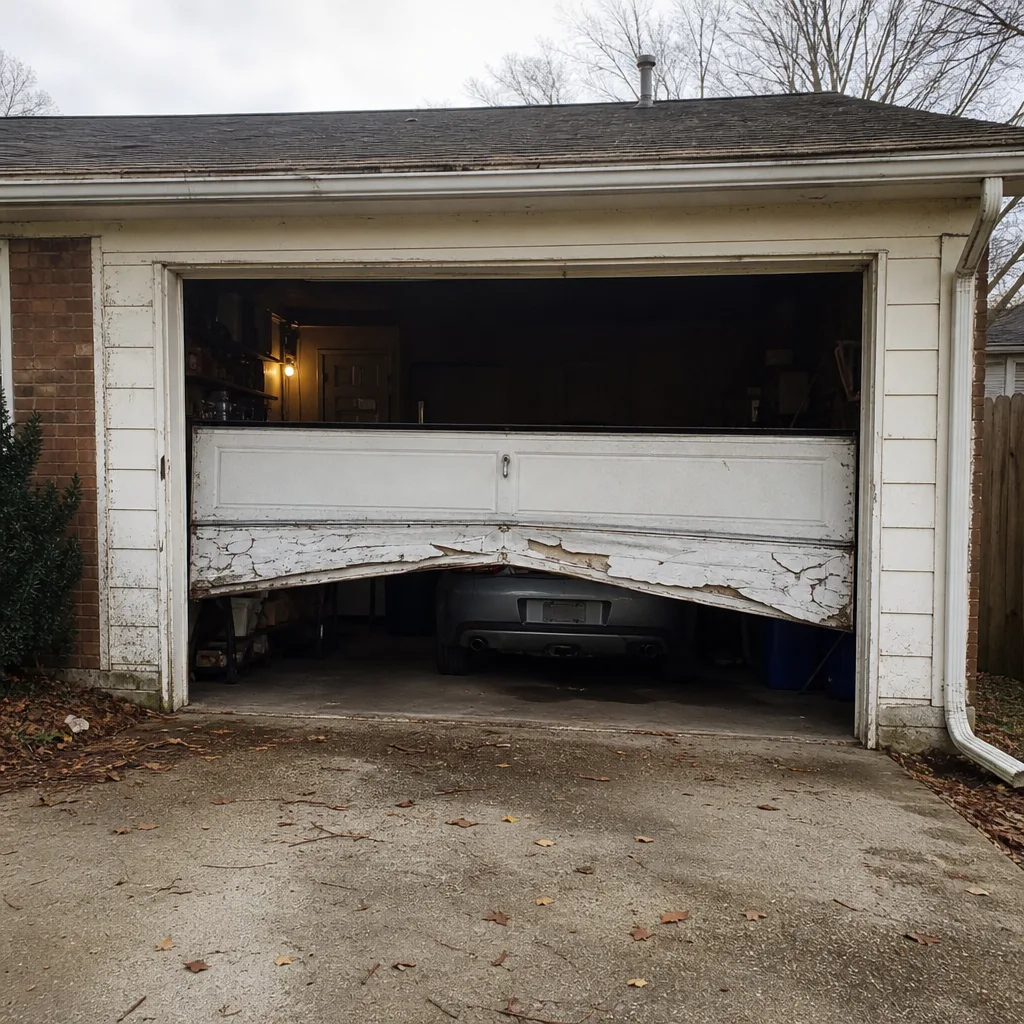 Before
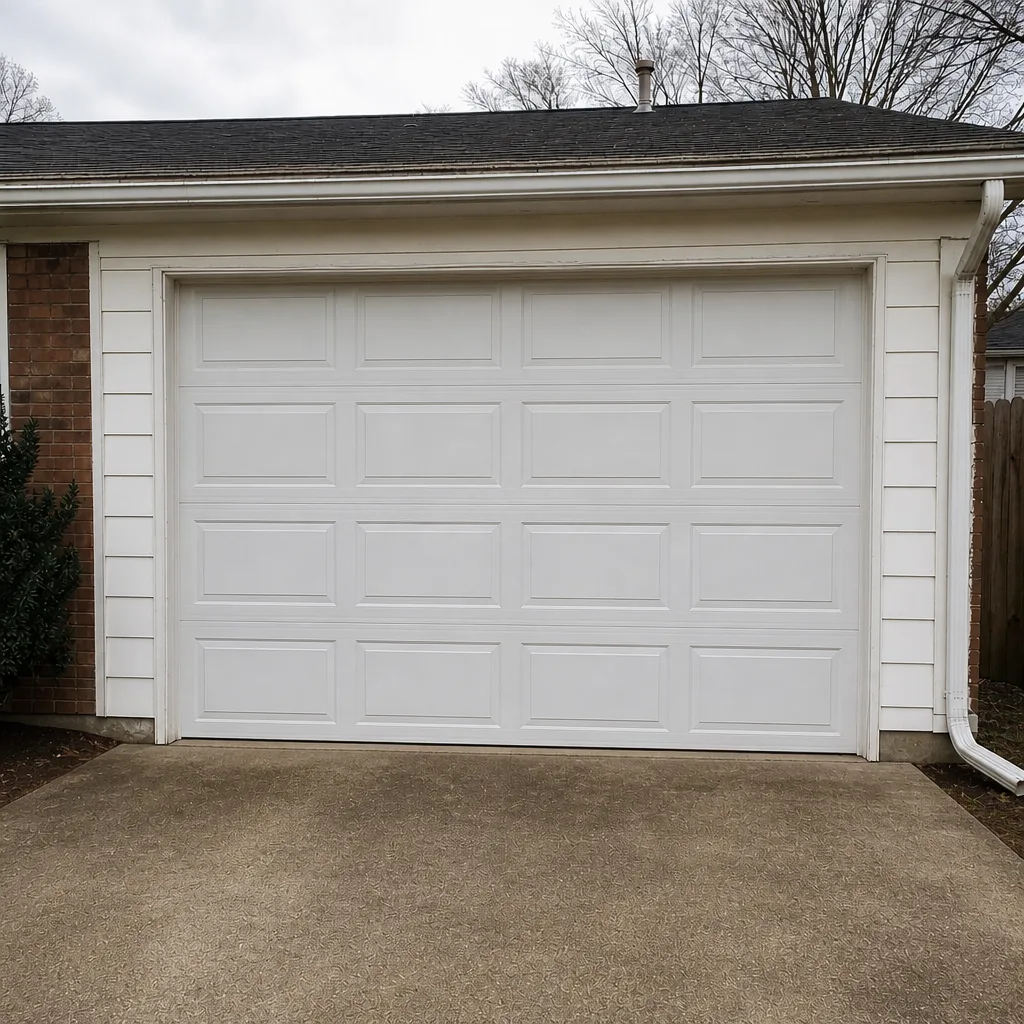 After
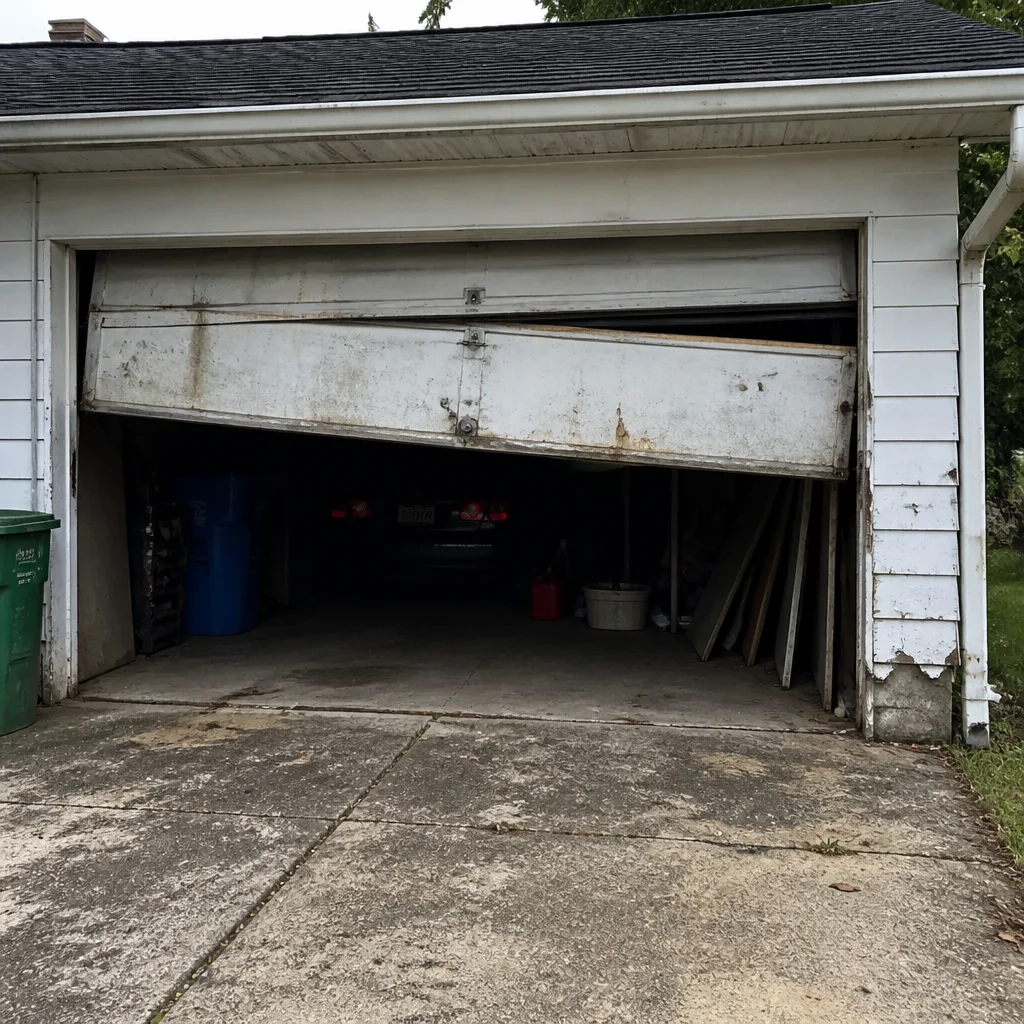 Before
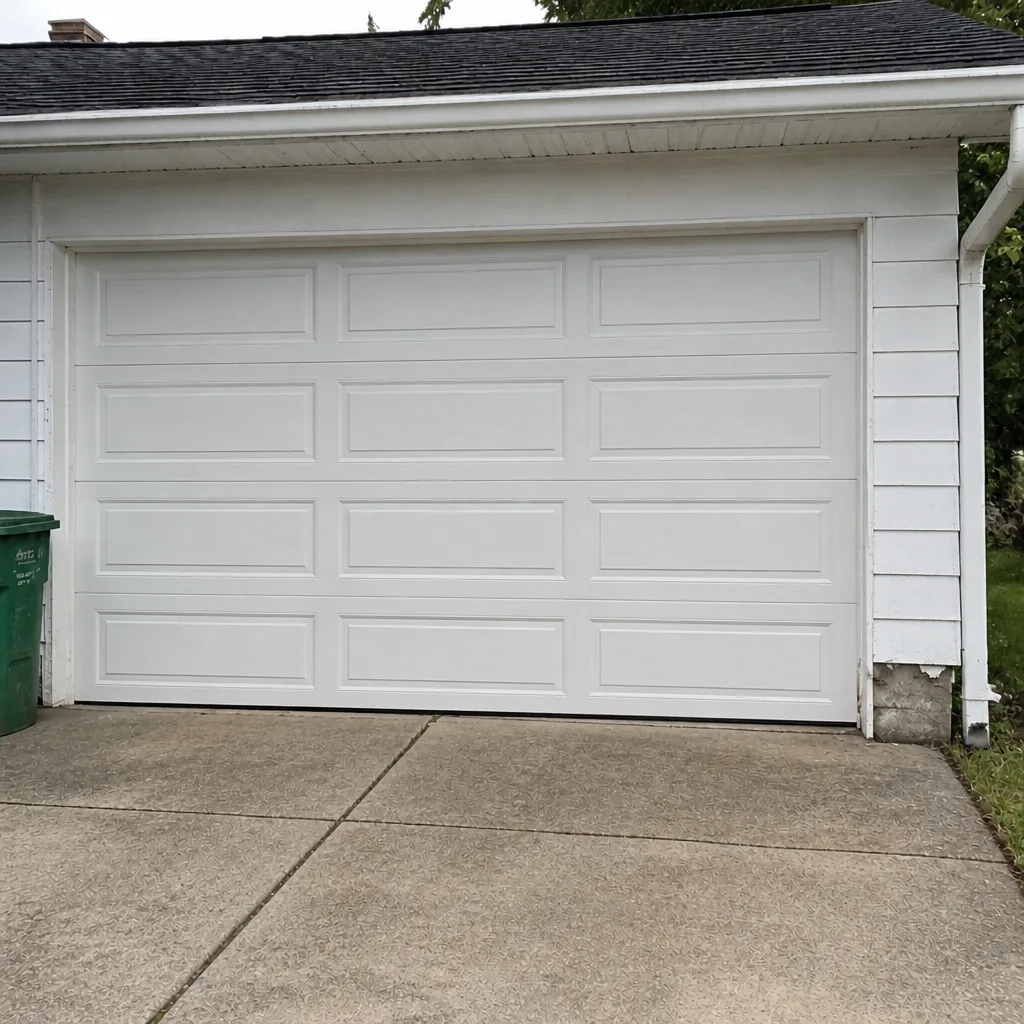 After
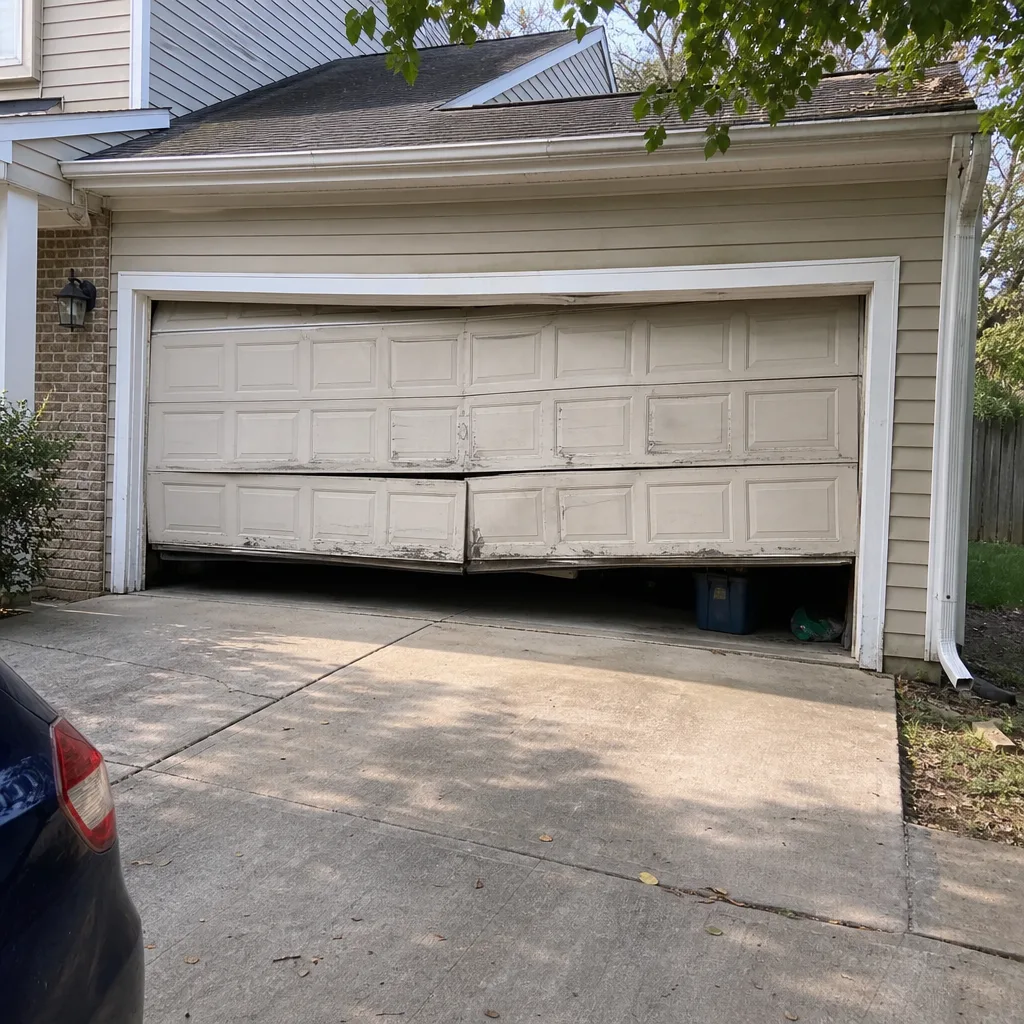 Before
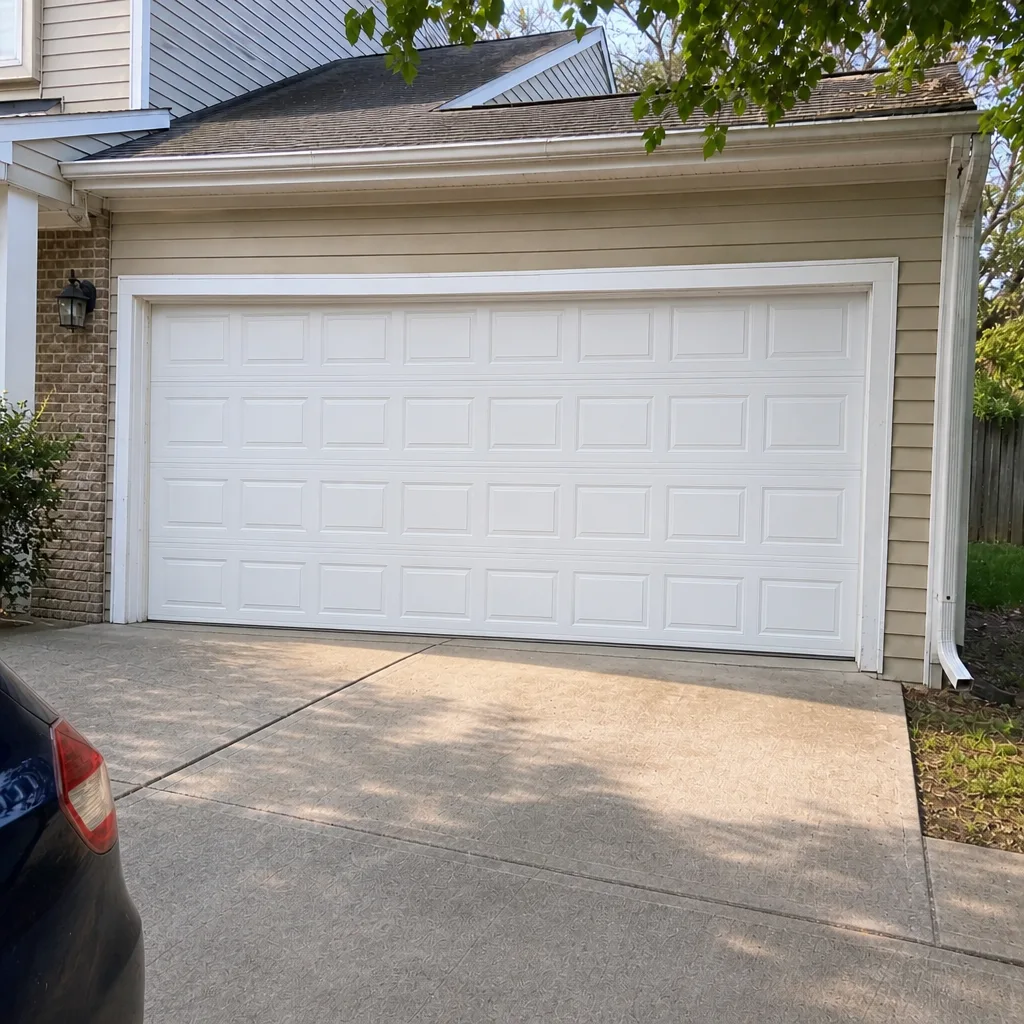 After
When to Call a Professional
Call a professional for anything involving torsion springs, cables, or opener electrical work. These are the genuinely dangerous parts of the system, and a mistake with a wound torsion spring or a live opener circuit can cause serious injury. Call us if your door won’t reverse on an obstruction, if safety sensors are missing or failing, if a spring has broken, if the door is off its track, or if you’re planning a full replacement and want a written scope before you call the county. We work on Raynor, LiftMaster, Chamberlain, and Genie equipment and a wide range of other brands, so a technician arrives already familiar with what you have. Meadow Garage Door Repair offers free estimates in Columbia – call (888) 721-9522. We answer 24/7. Fast dispatch from 7am to 7pm, Sunday through Friday.
Frequently Asked Questions
Often no, but not always. A like-for-like replacement on a newer home typically doesn’t require a Howard County permit. A full replacement on an older home, one that changes the opening or framing, or one that triggers fire separation review may require one. Call the Howard County Department of Inspections, Licenses and Permits with the specifics and get the answer for your address. For a free written scope before you call the county, call (888) 721-9522 – estimates are free.
Structural changes to the opening, new electrical circuits for opener installation, and full door replacements on homes that don’t meet current fire separation standards are the usual permit triggers in Howard County. Routine repair – springs, cables, rollers, panels, sensors, and opener components on existing wiring – does not require a permit. When in doubt, ask the county; the question is free and the answer protects your sale. Call (888) 721-9522 for an exact scope – estimates are free.
Yes, it can. Howard County real estate transactions include a permit history search, and a garage door replacement or opener installation without a corresponding permit can surface during the buyer’s inspection. The result is often a delayed closing, a buyer credit, or remediation costs. Pulling the permit up front is considerably less expensive than correcting it later. If you’re planning a sale, call (888) 721-9522 for a free estimate on any correction work – estimates are free.
They’re separate processes and you may need both. Howard County permits cover code compliance – structural, electrical, fire separation. Village HOA approval covers appearance – color, panel style, windows, materials. In Columbia’s villages, a door replacement that changes appearance often requires HOA approval, and a replacement that touches structure or fire separation often requires a county permit. Contact your village association and the county separately. For a free estimate on the installation side, call (888) 721-9522 – estimates are free.
Yes. Our technicians are state-licensed and insured, and our technicians have up to experience working on garage doors and openers. We work on your brand, including Raynor, LiftMaster, Chamberlain, Genie, Clopay, Amarr, Wayne Dalton, and Craftsman, and we diagnose before we recommend. Call (888) 721-9522 for an exact quote – estimates are free.
Most garage door repairs in Columbia run $95-$350 depending on the part, with spring replacement typically $180-$340 for one spring. A matched pair is usually replaced together and costs about twice that. A full door replacement typically runs $800-$2,500 for a standard single door and $1,500-$4,000 for a double, before permit and HOA costs. Every price is an estimate and the written estimate is the price you pay. Call (888) 721-9522 for an exact quote – estimates are free.
No. We set the price in the written estimate before any work starts, and that’s the price you pay. If we find something during the repair that changes the scope – a damaged track, a failing cable, a fire separation issue – we stop and quote the additional work in writing before we continue. You decide whether to proceed. Call (888) 721-9522 for a free estimate – the written quote is the price.
The Bottom Line
Most garage door work in Columbia, MD needs no Howard County permit, but the exceptions matter: full replacements on older homes and opener installations tied to new electrical. Those are the jobs most often skipped, and they’re the ones that surface during a home sale inspection. Add in the fire-rated door requirement for attached garages, UL 325 safety compliance on every opener, and the separate HOA approval layer in Columbia’s villages, and the picture is clear: repairs are simple, replacements need a two-minute call to the county. Keep your permit records, test your safety sensors, and check your village guidelines before you order a door. When you’re ready for the garage door side of the project, call (888) 721-9522 for a free estimate. We answer 24/7. Fast dispatch from 7am to 7pm, Sunday through Friday. We work across Columbia and the surrounding Howard County communities.
Written by the team at Meadow Garage Door Repair.