
Last updated November 16, 2026
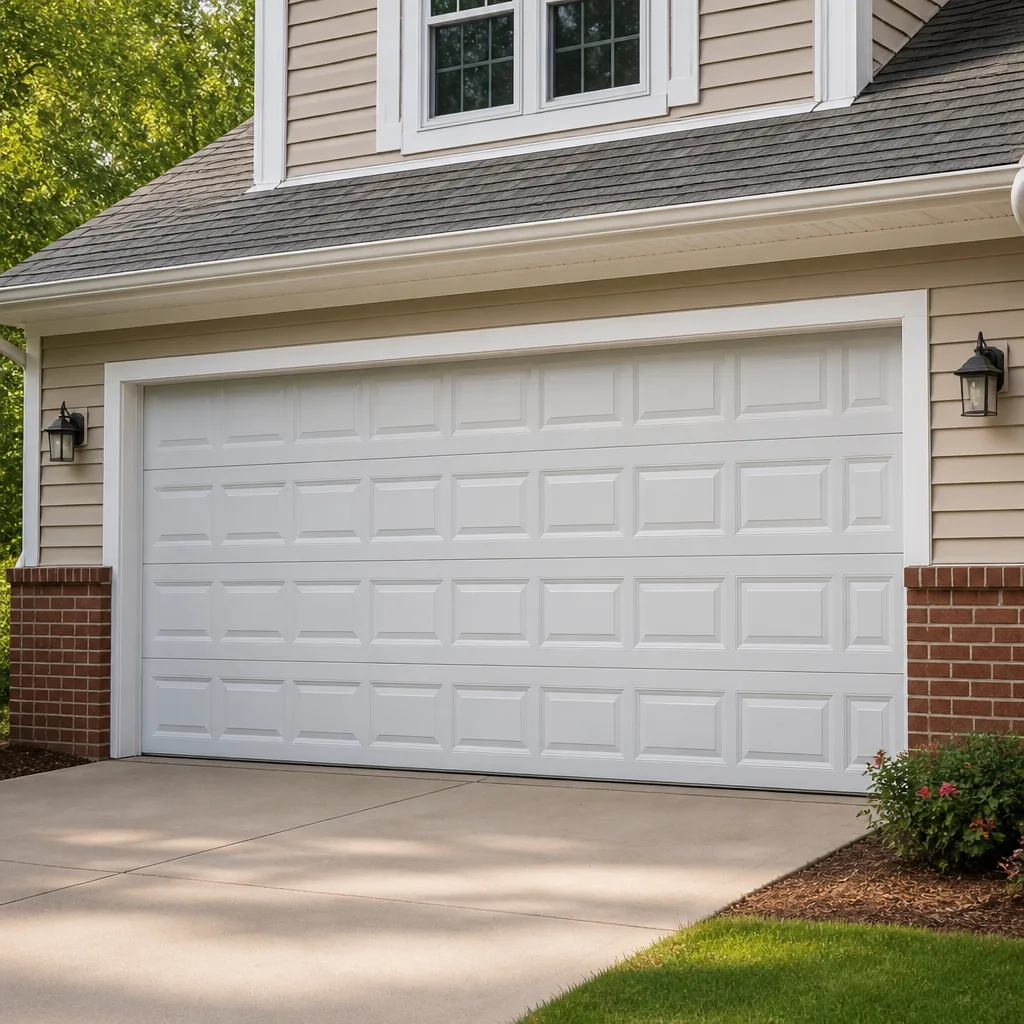 Raised-panel steel
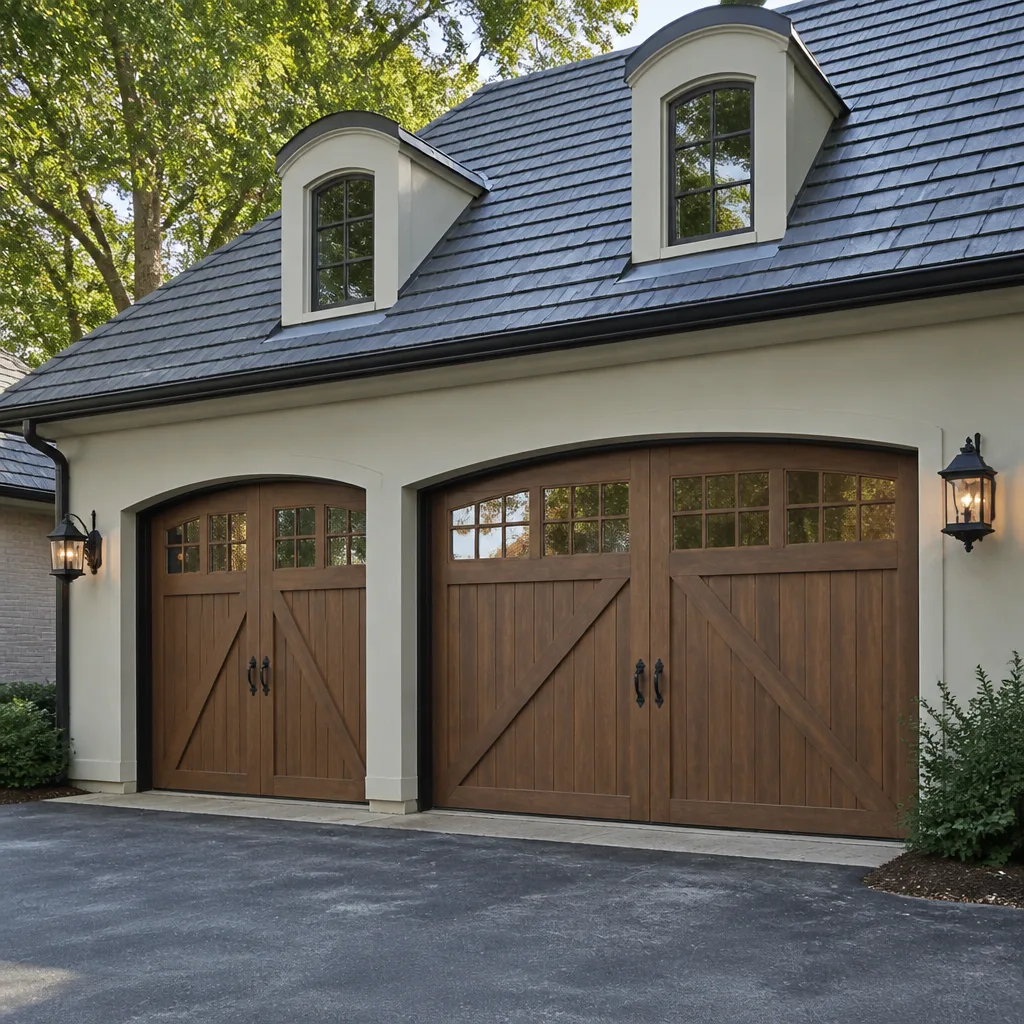 Carriage house
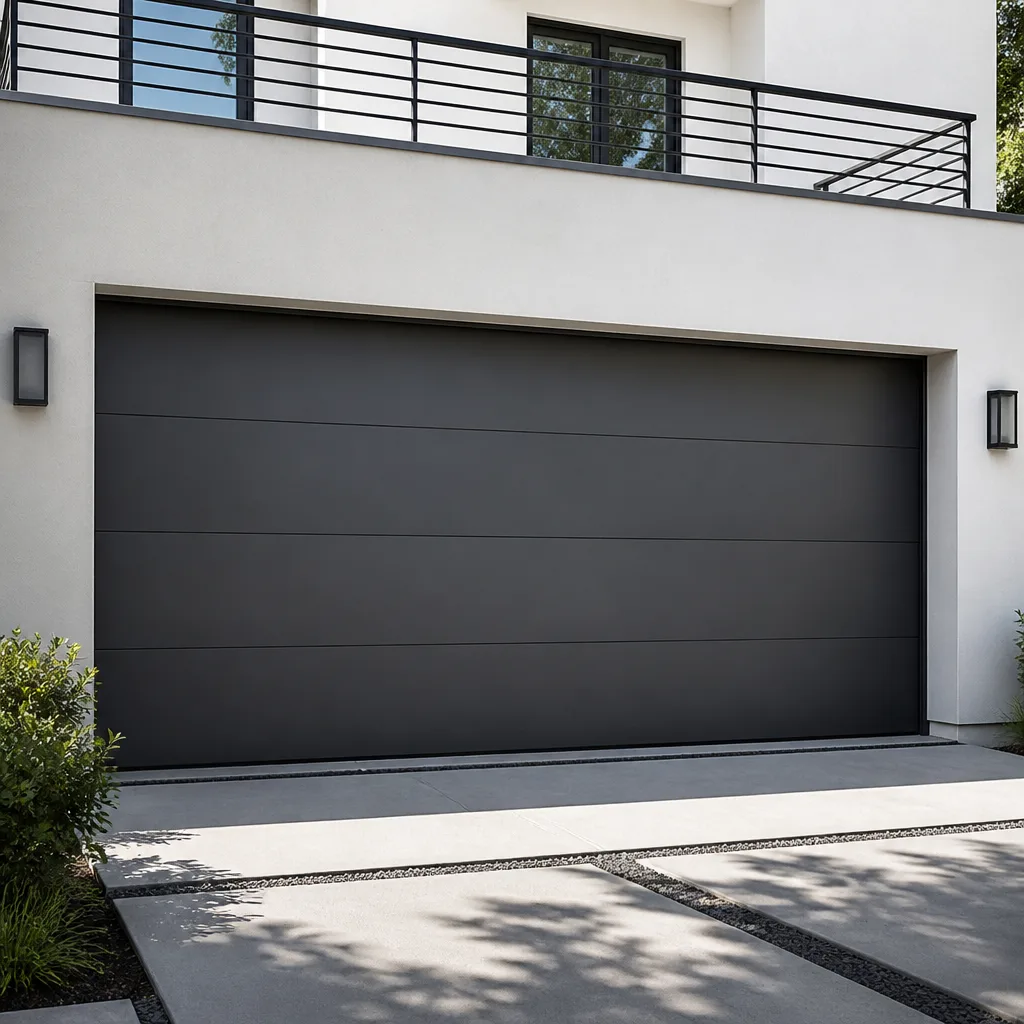 Modern flush
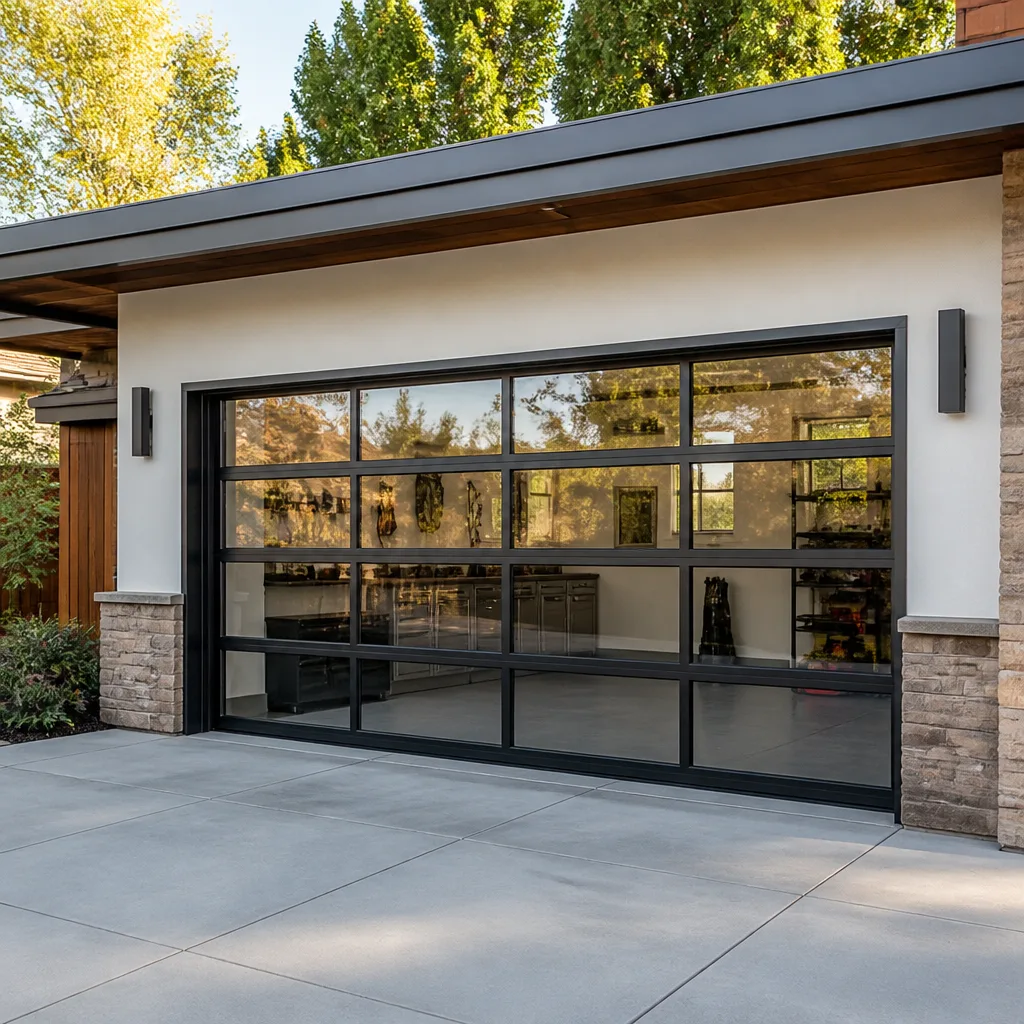 Full-view glass
 LiftMaster openers
 Chamberlain openers
Full 25-point door and opener safety check with every visit - springs, cables, rollers, tracks, and your LiftMaster or Chamberlain opener included
You get a price before we start. It does not change when the pro arrives.
Get your free estimateGarage Door Warning Signs: A Columbia Homeowner’s Reference Guide
The sign that a garage door spring is close to snapping usually isn’t a loud bang. It’s quieter than that: a door that suddenly needs the opener to work a little harder to lift it, or one that drifts shut on its own when you let go halfway up. Most homeowners in Columbia have already noticed something like this and explained it away. They assume the opener is getting old, or that the cold got to it, or that it’s just how the door has always been. This guide is about those early signals – what each one actually means inside the mechanism, and how to tell a harmless one-time noise from a pattern that’s telling you a part is wearing out.
Quick Answer
The most reliable early warning signs of a failing garage door are a door that lifts unevenly, one that drifts down on its own when stopped halfway, a recurring noise at the same point in every cycle, and an opener that has started straining or reversing for no obvious reason. Any of these means the door has an imbalance or a worn part, not that the opener is simply old. A door that won’t stay up, jerks violently, or hangs from a bent track should not be operated at all until a technician looks at it.
Styles & brands we work with
- Raised-panel steel
- Carriage house
- Modern flush
- Full-view glass
- LiftMaster openers
- Chamberlain openers
Table of Contents
- The One-Time Noise vs. the Recurring Pattern
- What Uneven Door Movement Actually Indicates
- The Balance Test: Reading Spring Wear Early
- Opener Behavior Changes That Point to the Door
- Severity Tiers: Monitor It, Schedule a Call, or Stop Using It
- Springs and Cables: The Parts You Should Never Touch
- How Columbia Conditions Affect Your Door
- The Two Safety Tests Worth Doing Yourself
The One-Time Noise vs. the Recurring Pattern
A single sharp clunk after a power outage, or a groan the first time you open the door after a cold snap, is usually nothing. It’s a door that sat still for a while settling back into its tracks. The signal that matters is a sound that repeats at the same point in the travel every single cycle. That’s the difference between a one-time noise and a pattern, and the pattern is the one worth writing down.
Here’s how to tell them apart without crawling around with a flashlight:
- Note where it happens. Does the noise come at the very start, at a specific height in the middle of the travel, or at the end as the door closes? A sound tied to one spot means a part is passing a worn section – a roller hitting a rough patch of track, or a hinge that binds at that angle.
- Count the cycles. If you hear it twice a day for three days running, it’s a pattern. If it happened once after a storm and never again, it isn’t.
- Listen for the type of sound. A steady squeal is usually metal on metal – dry rollers or hinges. A bang or pop at the start is more serious and points toward a spring under load or a cable slipping.
- Check whether it changes with temperature. Many doors that groan only on cold mornings are telling you the metal has contracted and tolerances have tightened. That’s often fixable with lubrication, but it’s also a reason to have someone confirm the spring hasn’t lost tension.
None of this requires you to climb a ladder or open a torsion tube. You’re just observing. If the same noise shows up at the same point in the cycle more than three or four times, it’s moved out of the “weird one-off” column. In our experience, homeowners in Columbia who catch a repetitive squeal early usually need a lubrication and roller check. Those who wait often end up replacing a hinge or a section of track.
What Uneven Door Movement Actually Indicates
A door that lifts crooked, with one side clearly higher than the other, is almost never the opener’s fault. Most homeowners assume the motor is weak or the door is out of alignment and go straight to replacing the opener. In reality, the door has lost its balance. One of the two springs has weakened or the cables have unequal tension, so the opener is fighting gravity on one side while doing less work on the other. That’s what pushes one corner ahead of the other.
There’s a second, subtler version of this that gets dismissed for months: the door that hangs perfectly level at rest but hesitates or speeds up during a specific part of the travel. You’ll hear the opener change pitch halfway up. That’s the door’s weight transferring unevenly as the spring loses its assist at that point in the arc.
What uneven movement usually means, in plain terms:
- One spring weaker than the other. On a two-spring setup – common on wider doors – one breaks or fatigues first. The door still works, so it gets ignored.
- A cable off its drum. The cable should wind evenly around the drum as the door moves. If it’s stacking on one side, the door tracks unevenly. This is a stop-and-call situation, not a monitor one.
- A bent or misaligned track. A door that rubs on one side can be pushed back straight, but only if the track itself isn’t kinked. A minor knock from a bike or a bin can be enough.
- A worn roller or a loose hinge. One seized roller on one side is enough to make the whole door drag unevenly.
We’ve had Columbia homeowners call us after months of a slightly crooked door, convinced they needed a new opener. What they usually need is an adjustment and a spring check. Repair first, replace second is the honest order of operations, and it’s the reason a brand-neutral diagnostic look matters before anyone quotes you a new operator.
The Balance Test: Reading Spring Wear Early
The balance test is the single most useful thing you can do at home, because it catches spring wear before the spring actually fails. It takes about a minute. You do it with the door closed and the opener disconnected.
- Disconnect the opener. Pull the release cord (usually a red handle hanging from the rail) so the door is running on its springs alone, not the motor.
- Raise the door by hand to about waist height. Lift it slowly and with a straight back, using both hands. It should feel heavy but controlled.
- Let it rest at waist height and take your hands away. A properly balanced door stays put. It might drift a couple of inches; that’s normal.
- Watch for drift. If the door slides back down on its own, the springs have lost tension. If it climbs upward, they’re wound too tight. Either way, the springs are no longer matched to the door’s weight.
- Lower it gently and re-engage the opener. Reconnect the latch before you run the door under power again.
A door that fails the balance test isn’t necessarily dangerous yet. But it is telling you the springs are working harder than they should, and that’s the condition that wears a spring toward failure. That said: if the door feels extremely heavy, won’t stay up at any height, or makes a bang during the lift, stop the test and stop using the door. Those point to a spring that’s already at the end of its life, and the safest move is to leave the door closed until a licensed technician looks at it.
This is also the best argument against the “wait for the bang” mindset. In our experience, a dying spring almost never fails without any warning. It gives weeks of signals that are only visible if you actually test for balance rather than assuming a working door is a healthy one.
Opener Behavior Changes That Point to the Door
Homeowners are understandably quick to blame the opener, because it’s the part with a motor and a plug and the reassuring noise. But a big share of “the opener is failing” calls turn out to be the door itself fighting back. The opener is doing what it’s told: it can only lift what the door allows it to.
Openers, like the LiftMaster and Chamberlain units we service regularly, are designed to reverse when they meet resistance. So when the door starts dragging because a spring has weakened or a roller has seized, the opener senses more load and reverses – and the homeowner reads that as an opener failure. Here’s what to look for instead:
- Inconsistent reversal. Doors that reverse sometimes but not others, with nothing blocking the safety eye, are usually meeting inconsistent resistance from a door that isn’t moving freely.
- Shorter travel. If the door no longer opens fully, or stops a few inches short, the opener may be cutting out on a force limit that the door’s weight is tripping.
- A motor that groans but doesn’t lift. A door that refuses to budge while the opener strains is usually a spring, cable or track problem – not a motor on its way out.
- Remote and wall-button problems with a smooth door. If the door runs fine by hand but the remote is unreliable, that’s a genuine opener or electronics issue and one we handle through our garage door opener repair service.
The way to tell the difference is to disconnect the opener and try the door by hand. If the door is hard to lift or won’t stay up, the door is the problem. If the door moves easily by hand but the opener still misbehaves, the opener is. That single test saves a lot of unnecessary motor replacements. It’s also why our technicians arrive already familiar with your specific hardware – we work across LiftMaster, Chamberlain, Genie, Clopay, Amarr, Wayne Dalton, Craftsman and Raynor, so the door and the opener both get looked at on the same visit.
Severity Tiers: Monitor It, Schedule a Call, or Stop Using It
Every warning sign on a garage door falls into one of three buckets. Sorting them this way keeps you from panicking over a squeak and, more importantly, from ignoring the one symptom that actually matters. Here’s the tier system we use when a Columbia homeowner describes a door over the phone.
Tier 1: Monitor it
These are things to keep an eye on, not to act on today.
- An occasional squeak or groan, especially on the first cycle of a cold morning.
- A very slight unevenness (a quarter inch or so) that hasn’t gotten worse over time.
- A door that needs a finger of extra push to start, when the opener still lifts it smoothly.
- A single odd noise after a power cut or a heavy rainstorm.
Tier 2: Schedule a call this week
These are progressive problems. They start small and end in a stuck door or a broken part.
- A recurring noise at the same point in every cycle.
- Visible uneven movement, or a door that hesitates partway up.
- Failing the balance test – the door drifts down on its own.
- An opener that reverses or stops short without anything in the way.
- A door that runs, but only with a wrench-worthy amount of force by hand.
Tier 3: Stop using the door
These are the ones where running the door risks injury or further damage.
- A door that won’t stay up at all, or falls heavily when disconnected.
- A bang or snap followed by a door that drops or sags from one corner.
- A cable that has come off its drum, or a visibly loose, kinked or frayed cable.
- Track that is bent, detached, or holding the door off-plumb.
- A door that hangs crooked enough that it’s rubbing hard on the frame.
If you’re in Tier 3, don’t test it further. Leave the door closed and call a trained technician. A licensed team handles the garage door repair safely – springs and cables are not a homeowner job, and we’ll explain why in the next section.
Springs and Cables: The Parts You Should Never Touch
Everything above this point is observation and adjustment you can do without risk. Springs and cables are the line. A torsion spring on a residential door holds hundreds of pounds of tension, and a door can be standing in position on its springs alone. If that tension is released the wrong way – and it doesn’t take a mistake as dramatic as cutting the wrong spring – the result can be a full-speed release with serious injury potential. Cables, too, are under continuous tension and can whip when they let go.
So there’s no step-by-step here. What you should know instead:
- The balance test is for diagnosis, not adjustment. Let the door tell you the springs are weak. Don’t try to rewind, tighten or replace them.
- A broken spring is not a “see if it works anyway” situation. A door with one broken spring should stay shut until it’s repaired.
- Cables are just as unforgiving. A cable that has jumped its drum or is visibly frayed is a stop-now signal.
- Ask for a licensed technician. Spring and cable work needs proper winding bars and experience. Free estimates are fine; unsafe shortcuts by an untrained hand are not.
We say this plainly because homeowners are sometimes surprised when we won’t talk them through a self-repair on a spring. It’s the same reason we’d rather do the repair correctly than have to fix a worse situation later. A trained professional handles these parts safely; a homeowner should not.
How Columbia Conditions Affect Your Door
Garage doors fail in patterns that follow climate, and Columbia has a specific set of them. Our summers are humid and our winters alternate between cycles above freezing and overnight dips below it. That matters in two ways for the door.
First, humidity on its own is mostly hard on the hardware, not the panels. Steel hinges, rollers and the metal lift arms in an outdoor-connected garage will corrode and dry out in humid air, which is what produces that recurring squeal on the first cycle of the day. Columbia garages tucked under trees and with poor ventilation are worse offenders. It’s also why garage doors here do better with a yearly lubrication and a check of every hinge, rather than one big attention every few years.
Second, temperature swings push expansion and contraction through the whole assembly. A door that fits perfectly at 70 degrees may bind at 20. That’s usually a roller or track tolerance issue, not a spring about to break. What you’ll notice is a door that grinds in the cold and runs fine in the warm, or a door that starts stopping short when the temperature drops. Both are worth looking at, and neither is a sign to stop using the door.
Doors toward the water, or on the west-facing side, also take more direct sun and heat, which dries out rubber seals and the lubricant on the rollers. In a community like Columbia with its own mix of older and newer housing, you’ll also find plenty of steel doors that have quietly aged out of their rollers and a few Clopay or Amarr doors still going strong because they’ve been maintained. If you’re not sure which case you’re in, our team covers the whole of Columbia and can look at your specific door on site.
The Two Safety Tests Worth Doing Yourself
There are exactly two tests a homeowner should run on a garage door, because both test the equipment meant to protect you. The first is the balance test above. The second is the safety reverse test.
- Test the mechanical reverse. With the door open, lay a roll of paper towels flat on the ground in the middle of the opening where the door will close. Press the wall button to close it. The door should reverse on contact with the object without crushing it. If it keeps pushing, stop the door and have the opener checked.
- Test the safety eyes. With the door open, press the wall button to close it, then wave your leg or a broom handle through the beam near the floor on the side with the photo eyes. The door should reverse immediately. If it doesn’t, one eye is blocked, misaligned or dead.
These two tests catch the majority of failures that cause door injuries, and they take a couple of minutes. Both are about the door and the opener working together, which is why a single visit that covers both is better than a specialist for each. Our team handles Meadow Garage Door Repair work on both sides of that equation.
Common Mistakes to Avoid
- Blaming the opener for a door problem. Replacing an opener before testing the door by hand is the most expensive version of misdiagnosis. Disconnect the opener and lift the door yourself first.
- Greasing the tracks. Tracks should be kept clean, not greased. Lubricant on the tracks attracts grit and gum, and a door that used to slide well starts galling. Lubricate the rollers, hinges and springs, not the tracks.
- Waiting for the loud bang. A failing spring gives weeks of warning if you know what to look for. A door that needs force to lift and drifts down on its own is telling you before it fails.
- Ignoring the “small” noise in Columbia’s humid months. A recurring squeal here is often dry or corroding hardware. It’s the cheapest thing on this list to catch and fix.
- Adjusting the opener’s force limits to push through resistance. That just masks the problem. The resistance is the diagnosis.
- Assuming a crooked door needs a new one. Uneven travel is almost always a balance, cable or track issue, not a reason to replace the door. A brand-agnostic technician works on what you have first.
- Trying to fix springs or cables yourself. There’s no version of this that’s worth the risk. A trained technician with the right winding bars should handle it.
See the difference
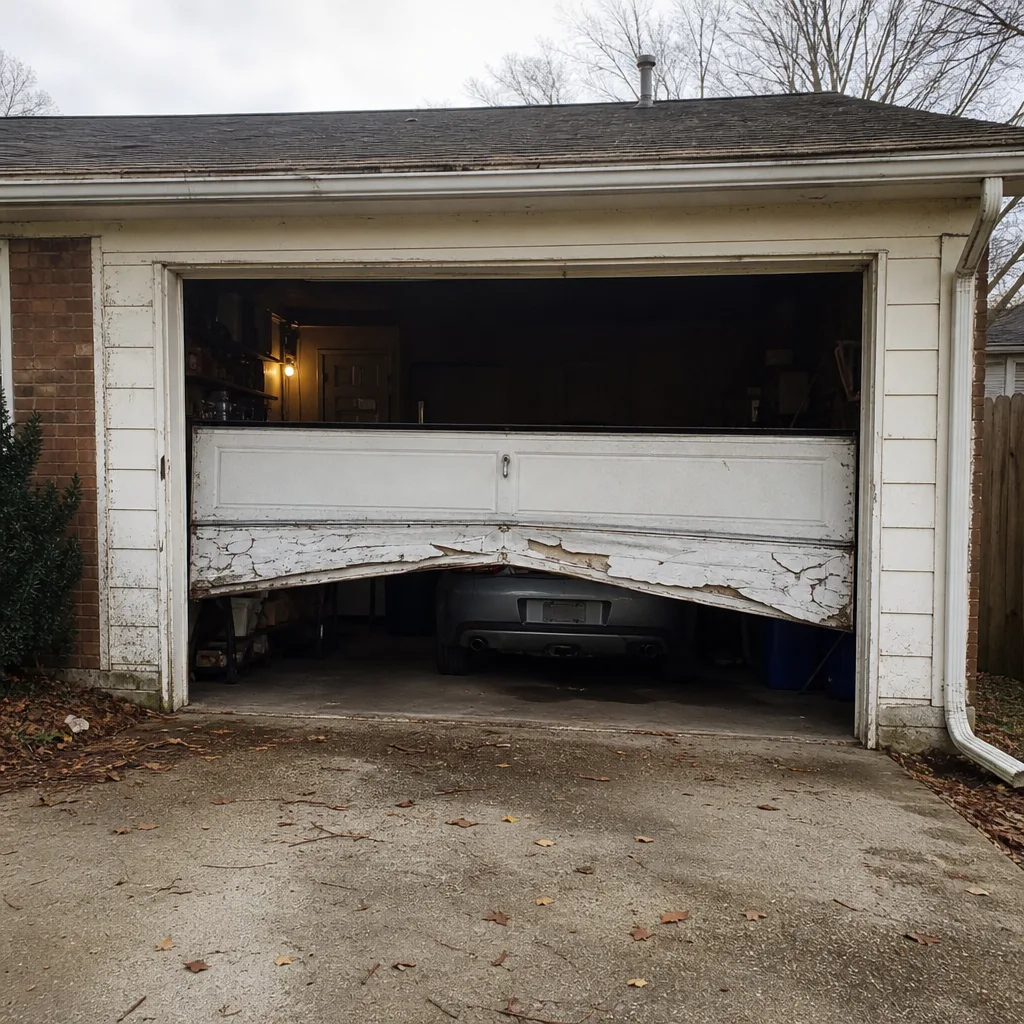 Before
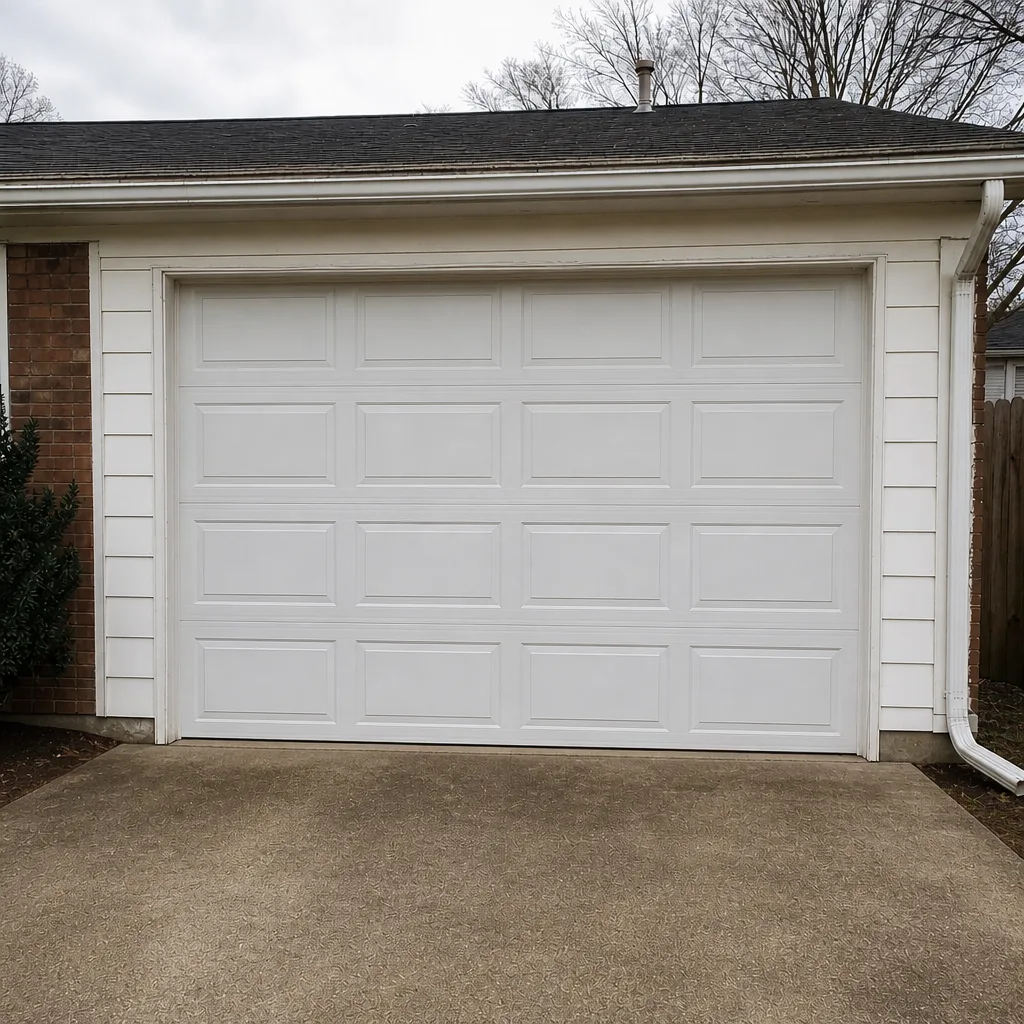 After
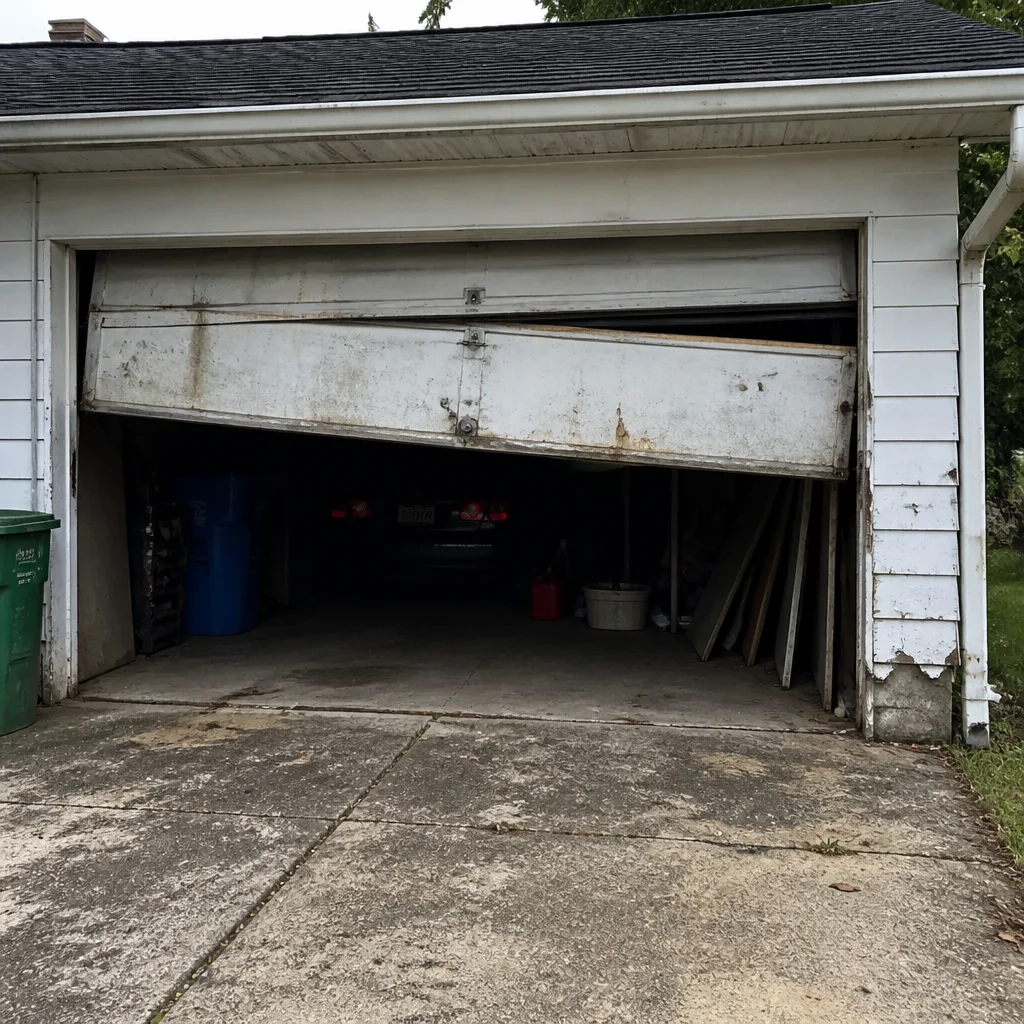 Before
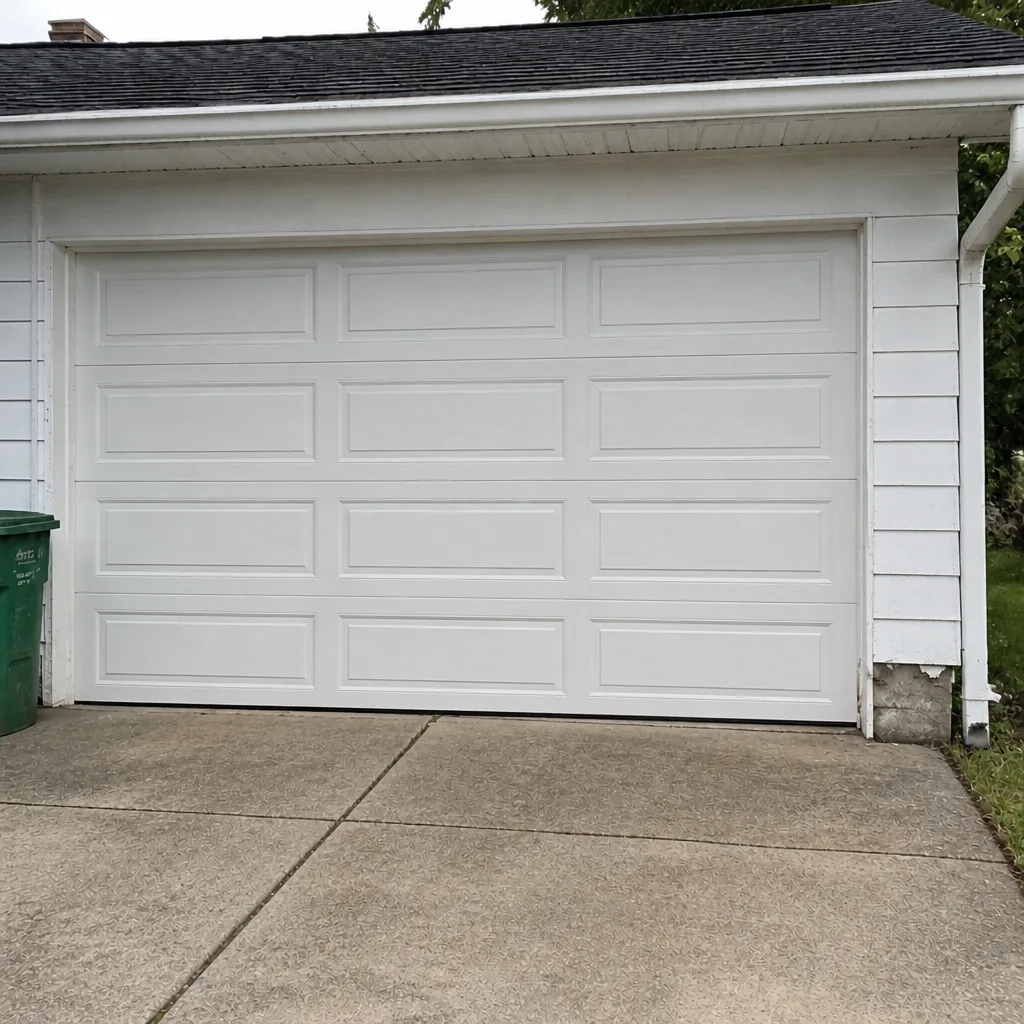 After
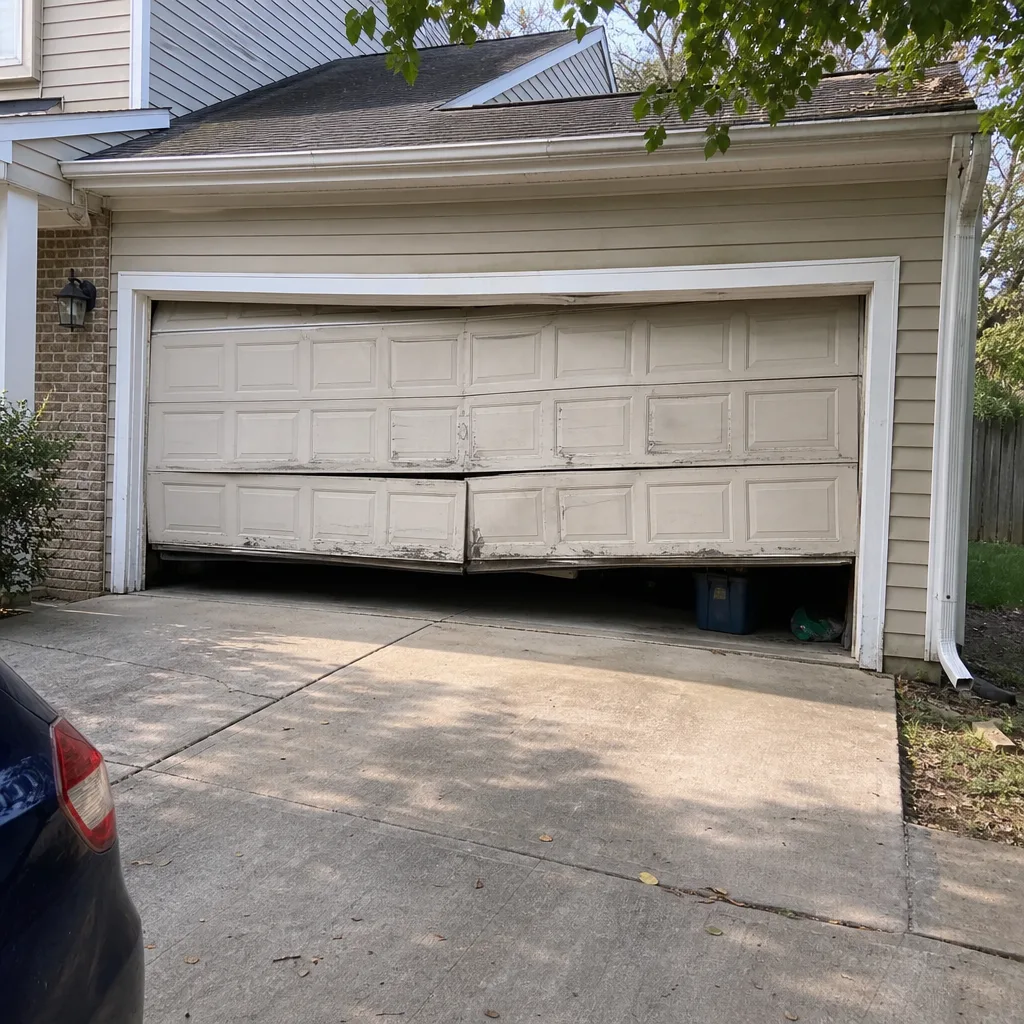 Before
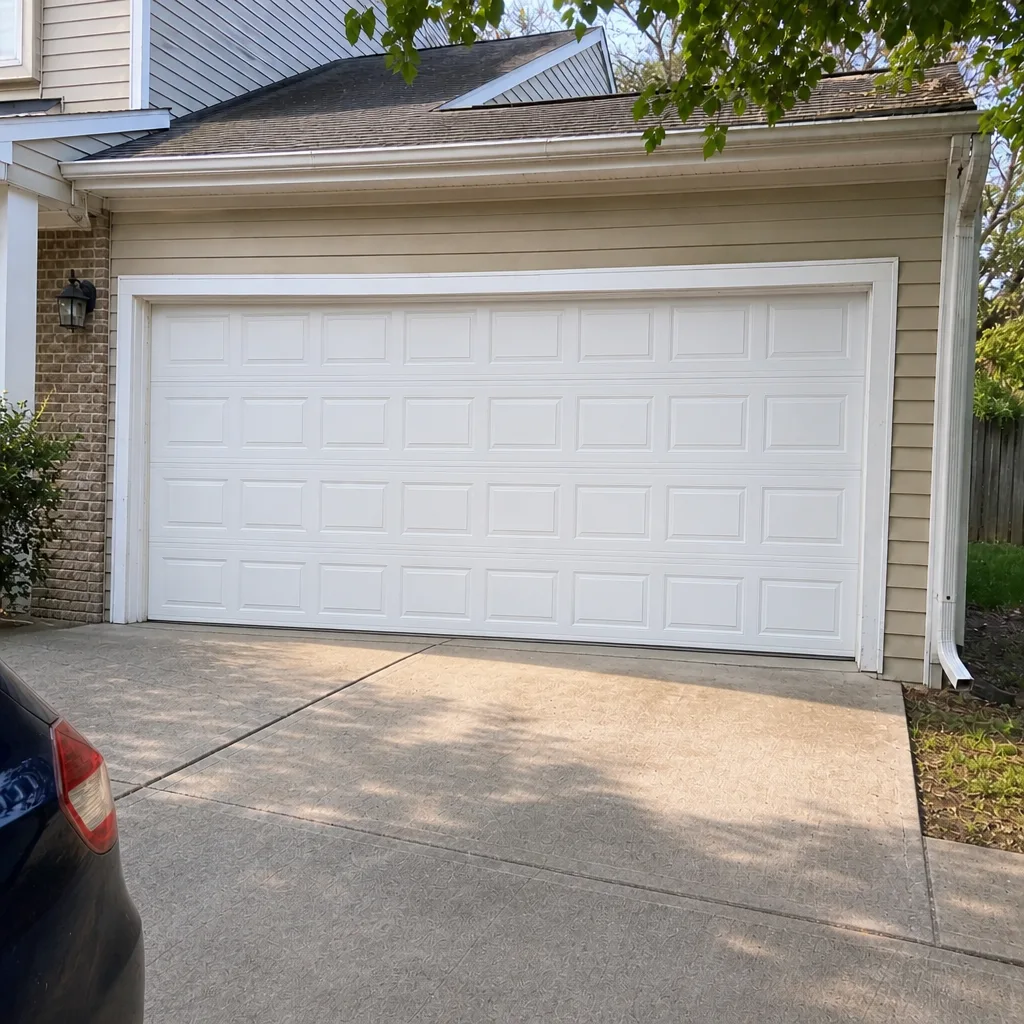 After
When to Call a Professional
Call a professional if the door fails the balance test, moves unevenly, reverses for no reason, or makes a recurring noise at the same point in every cycle. Call immediately, and stop using the door, if there’s a bang and a sag, a cable off its drum, a bent or detached track, or a door you can’t hold up. If you’ve had a door that “seems fine except it’s a bit stiff” for more than a season, that’s a Tier 2 call too – it’s cheaper to catch a weakened spring than to repair a door that dropped. Meadow Garage Door Repair offers free estimates in Columbia – call (888) 721-9522. We answer 24/7. Fast dispatch from 7am to 7pm, Sunday through Friday.
Frequently Asked Questions
The first sign is usually that the door gets harder to lift by hand and stops holding its position at halfway, followed by a change in how hard the opener has to work. The balance test catches it earliest: disconnect the opener, lift the door to waist height, and see whether it stays put. If it drifts down, the springs have lost tension. Call (888) 721-9522 for an exact quote on repair – estimates are free.
No. A one-time clunk after a power outage or a cold morning is usually harmless, while a noise that repeats at the same spot in every cycle is worth a call. Sound tied to a specific point in travel means a roller, hinge or track section is binding. Lubrication and a hardware check fix most of these, and catching one early is cheaper than a hinge replacement.
Most garage door repairs in Columbia run from a simple adjustment or lubrication in the low hundreds to a full spring or cable repair where you should expect an estimate before work starts. Exact pricing depends on your door, its age and which parts need replacing, and we price per job with a written estimate you approve first. Call (888) 721-9522 for a free estimate – the price is quoted and agreed before any work starts.
No. We write an estimate based on what we actually find, and that written estimate sets the final price before any work begins. If we discover something during the repair that changes the scope, you hear about it and approve it before we continue. Call (888) 721-9522 to book a visit.
Often yes, especially for a stuck door or a broken spring – those are repairs and we dispatch quickly. We answer 24/7, with fast dispatch from 7am to 7pm, Sunday through Friday. For a door you can’t safely open, keep it closed and call (888) 721-9522.
Yes. We handle door repair, opener repair and full installation, so if the door and the motor both need attention it’s one call and one visit. We work on LiftMaster, Chamberlain, Genie, Clopay, Amarr, Wayne Dalton, Craftsman and Raynor hardware, so we arrive already familiar with what you own. Call (888) 721-9522 – estimates are free.
Yes, the independent local professionals who handle the work are licensed and insured, and they’re experienced with residential garage doors. Our technicians have up to experience. If you want to confirm the details of a specific job, ask when you call.
The Bottom Line
Almost every garage door failure gives warning well before it fails. A door that drifts down on the balance test, a noise at the same point in the cycle, a door that lifts crooked or forces the opener to strain – these are all early-stage signals, and they’re cheap to fix when you catch them. What isn’t cheap is waiting for the bang, then driving a car into a door that’s halfway up. Sort every symptom into monitor it, schedule a call, or stop using the door. When in doubt, put a call in. Meadow Garage Door Repair covers Columbia and offers free estimates – call (888) 721-9522. We answer 24/7. Fast dispatch from 7am to 7pm, Sunday through Friday. One call covers the door, the opener and, when the time comes, a new installation.
Written by the team at Meadow Garage Door Repair.